Inside ZeroDay Commerce: Tracing Mushr00w’s Webshell Network

Webshells have become a familiar commodity in underground cybercrime communities. Instead of having to compromise a server themselves, buyers can purchase access that is already available and use it for their own purposes. For sellers, the model is simple: find vulnerable or compromised systems, maintain access, and turn that access into something that can be sold repeatedly. Telegram has become one of the places where this market is openly promoted, with sellers advertising everything from individual shell access to higher-value access on specific domains.

This investigation began with activity linked to this wider ecosystem and gradually led toward a Telegram user. What initially appeared to be another account operating within the underground quickly opened into a broader picture involving shell sales, private communities, other operators, and relationships that were not always straightforward.

Using StealthMole, the investigation moved between technical detections, Telegram activity, channel memberships and associated identities to piece together that picture. The findings reveal more than a single seller advertising access. They show how webshells are marketed, how sellers build communities around those services, and how disputes, collaborations and new identities can leave additional traces behind.

The First Signs of Compromise

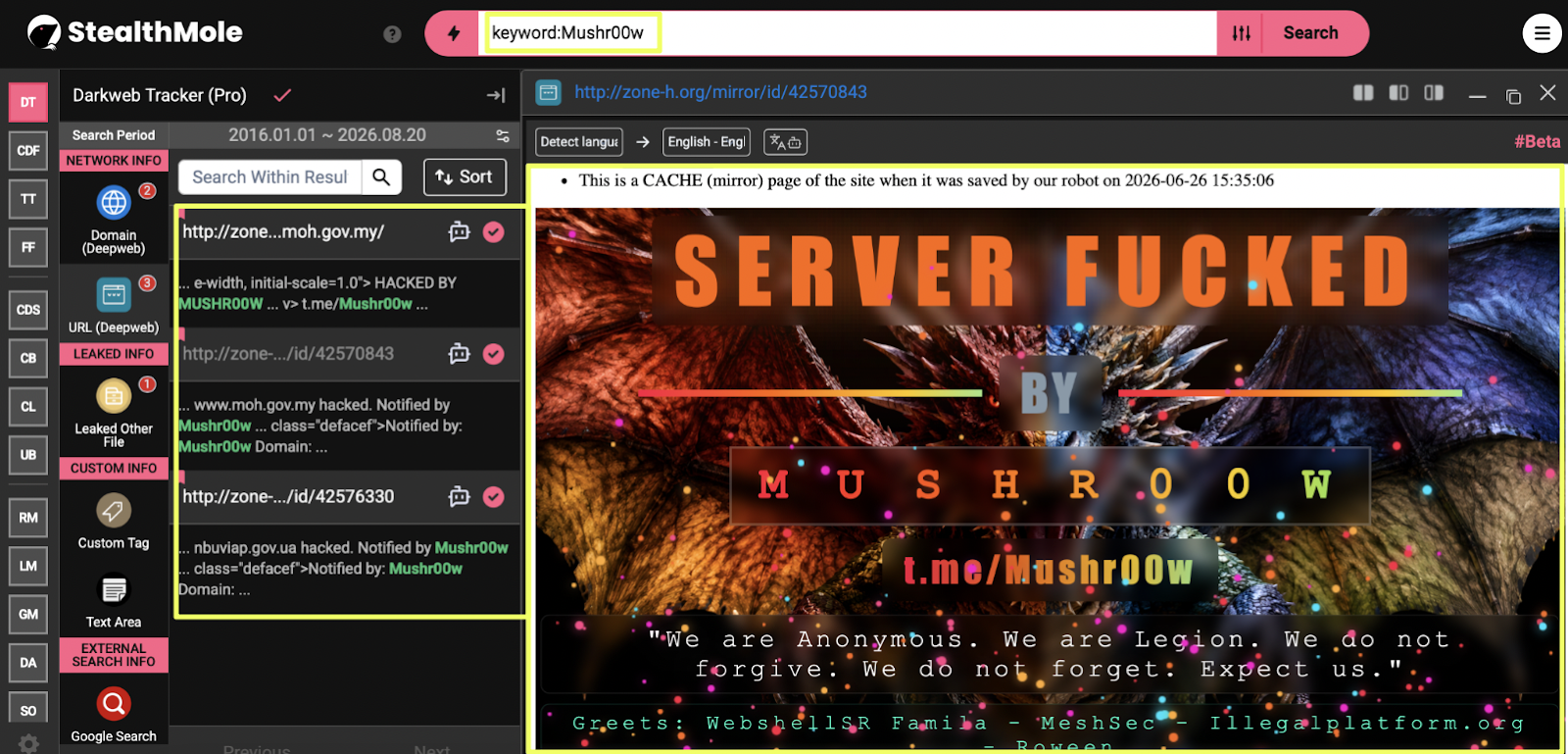
The first lead came from StealthMole’s Defacement Alert, where Mushr00w was listed in connection with the defacement of the two government websites: Malaysian and Ukrainian.
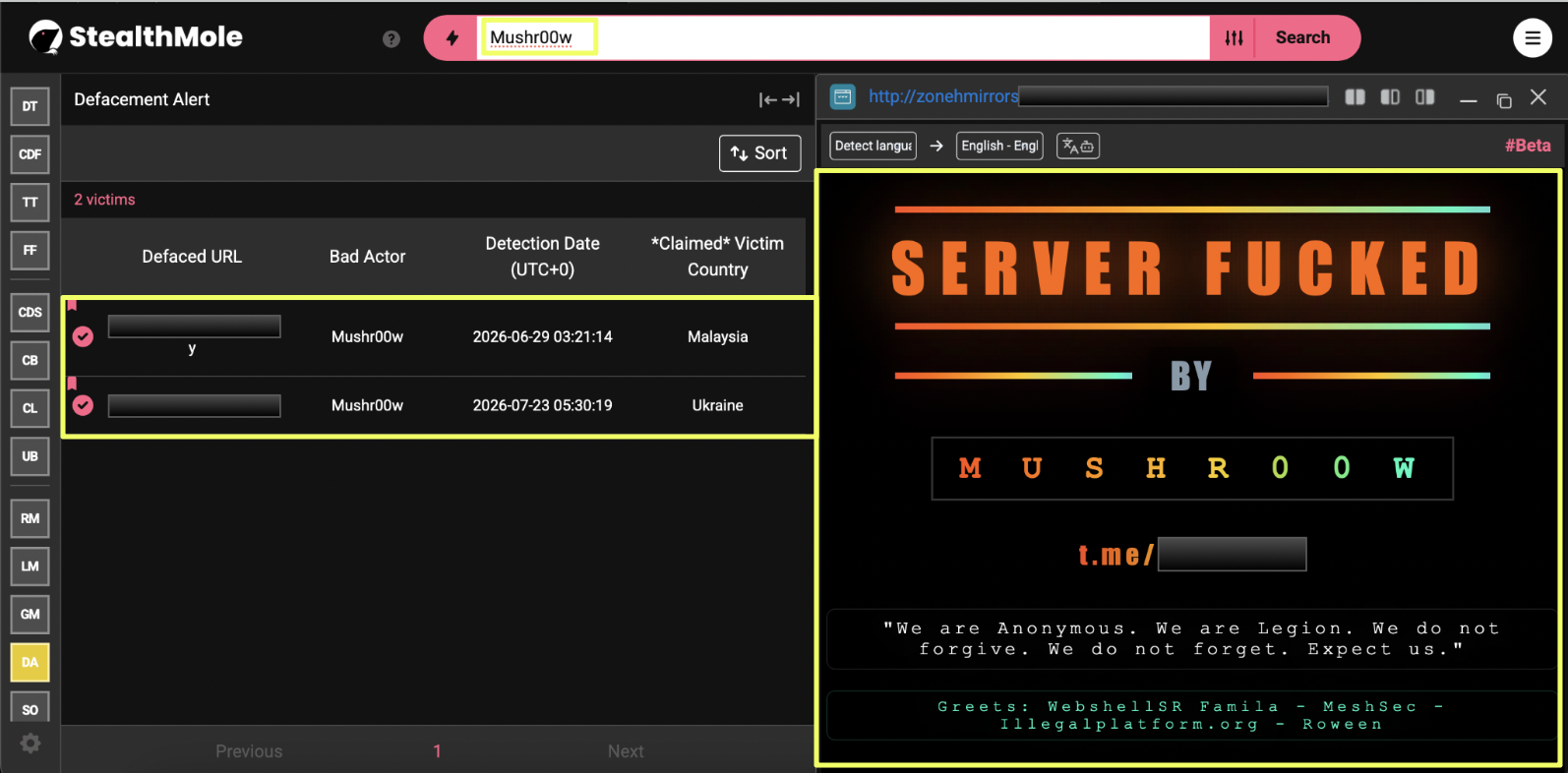
The defacements themselves provided the first real connection to the actor. The pages were signed “SERVER FUCKED BY MUSHROOW” and, more importantly, included a direct Telegram address:

  • http://t.me/M*****w

The pages also carried the familiar message, “We are Anonymous. We are Legion. We do not forgive. We do not forget. Expect us.” Alongside it were greetings to WebshellSR Famila, MeshSec, Illegalplatform.org and Roween. These names are part of the defacement content, but there is no evidence at this stage to say that they were working with Mushr00w.

The Telegram address gave the investigation its first clear pivot. Rather than following only the defaced websites, the username Mushr00w was directly searched into StealthMole’s Darkweb Tracker to see what was attached to the account behind it.

That search also brought up historical Zone-H records for the two incidents. The Malaysian defacement, where the archived page again carried “HACKED BY MUSHROOW” and the same Telegram address. The Ukrainian incident was similarly linked to Mushr00w in connection with the defacement.

  • http://zone-h.org/mirror/id/42570843
  • http://zone-h.org/mirror/id/42576330

The important part was not simply that the same name appeared twice. The defaced pages had given us a direct identifier that could be followed into Telegram. That was where the investigation moved from the websites themselves to the person operating behind the Mushr00w name.

The Door Marked ZeroDay

The Telegram link on the defaced pages provided the first direct route to Mushr00w. Running Mushr00w through StealthMole’s Telegram Tracker returned an account with the Telegram ID 6775881965 and the username @M*****w. The account had not always used that name. StealthMole’s historical indexing showed the same Telegram ID under several different usernames, giving us a much longer history to work with.
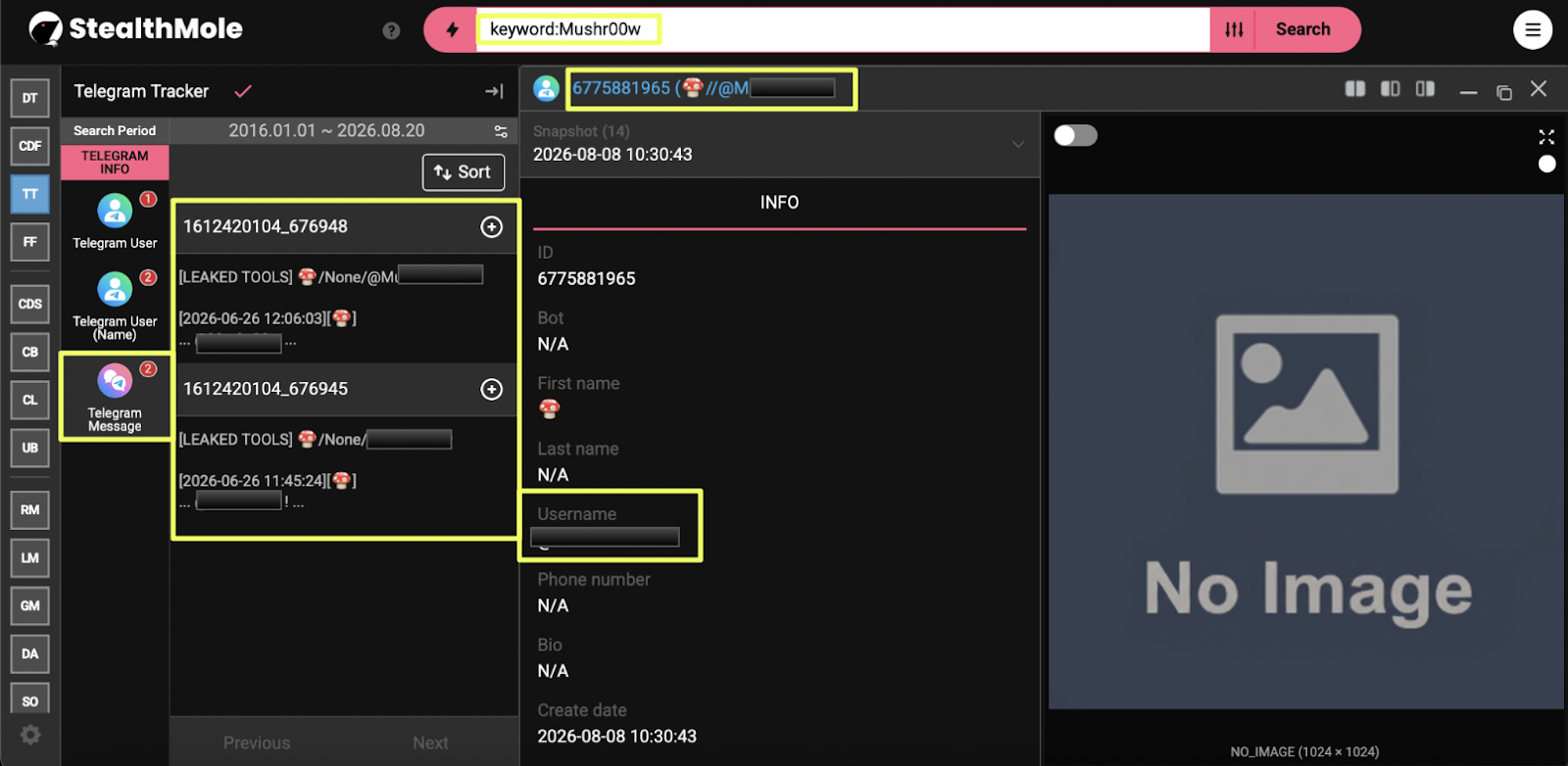
The account had previously appeared as @Lo****e, @Wiz****q, @Sur****a, @Raja_R33, @gh****e and @A*******z before settling on @M*****w. The historical snapshots also showed changes in the account’s display name, biography and profile image over time. For example, the account used the name R33 while operating as @Raja_R33 in October 2025, and later appeared as @Ah*******z before moving to @M*****w. The same Telegram ID ties these different usernames together, making the account history more useful than any single username on its own.
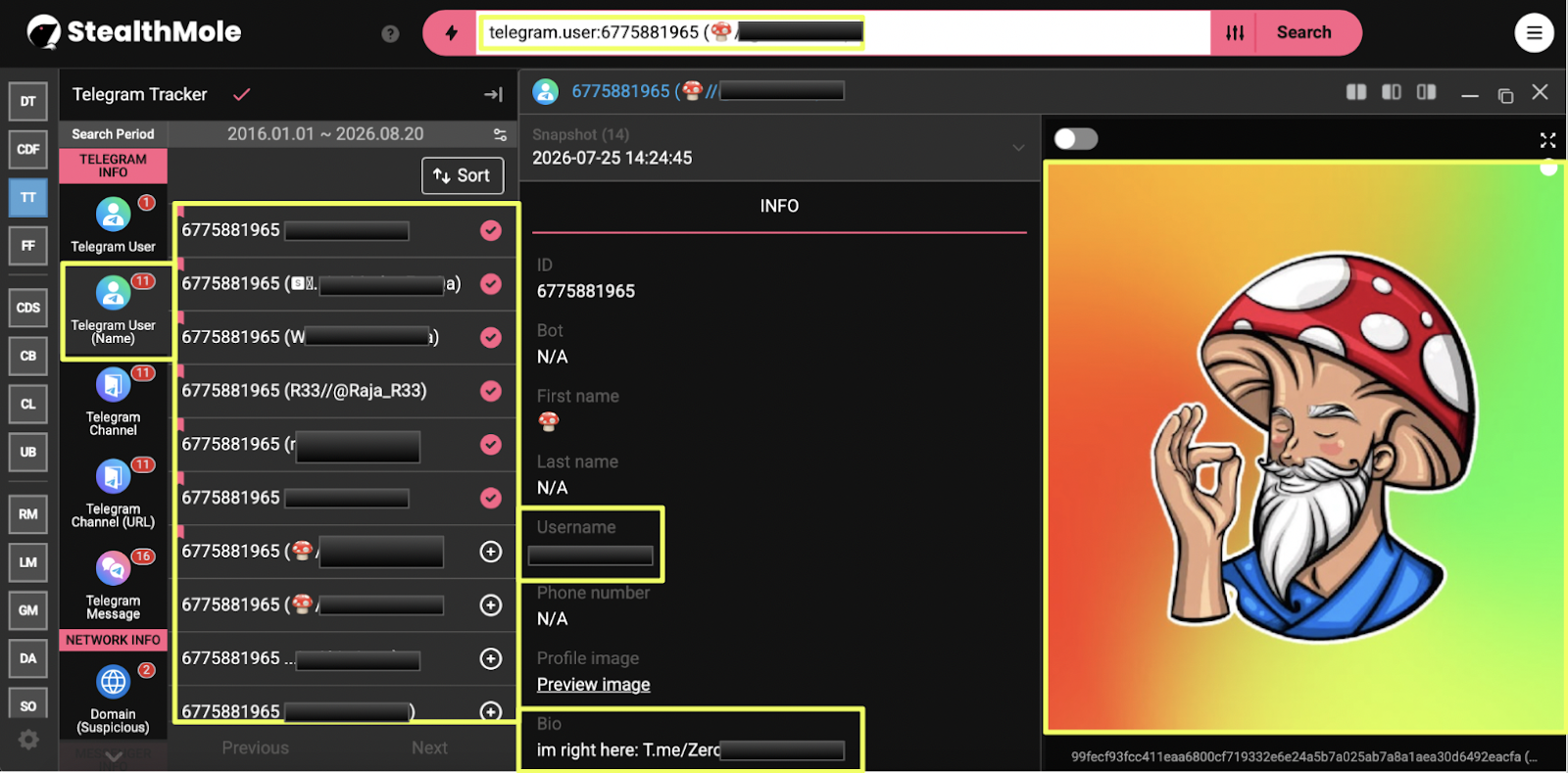
There were also some interesting changes in the account’s bio. On July 25, 2026, while using @M*******w, the bio read “im right here: T.me/Zer*******e”. That short line turned out to be the next important lead in the investigation. It pointed directly to a private Telegram community that was much more closely connected to Mushr00w’s activity.

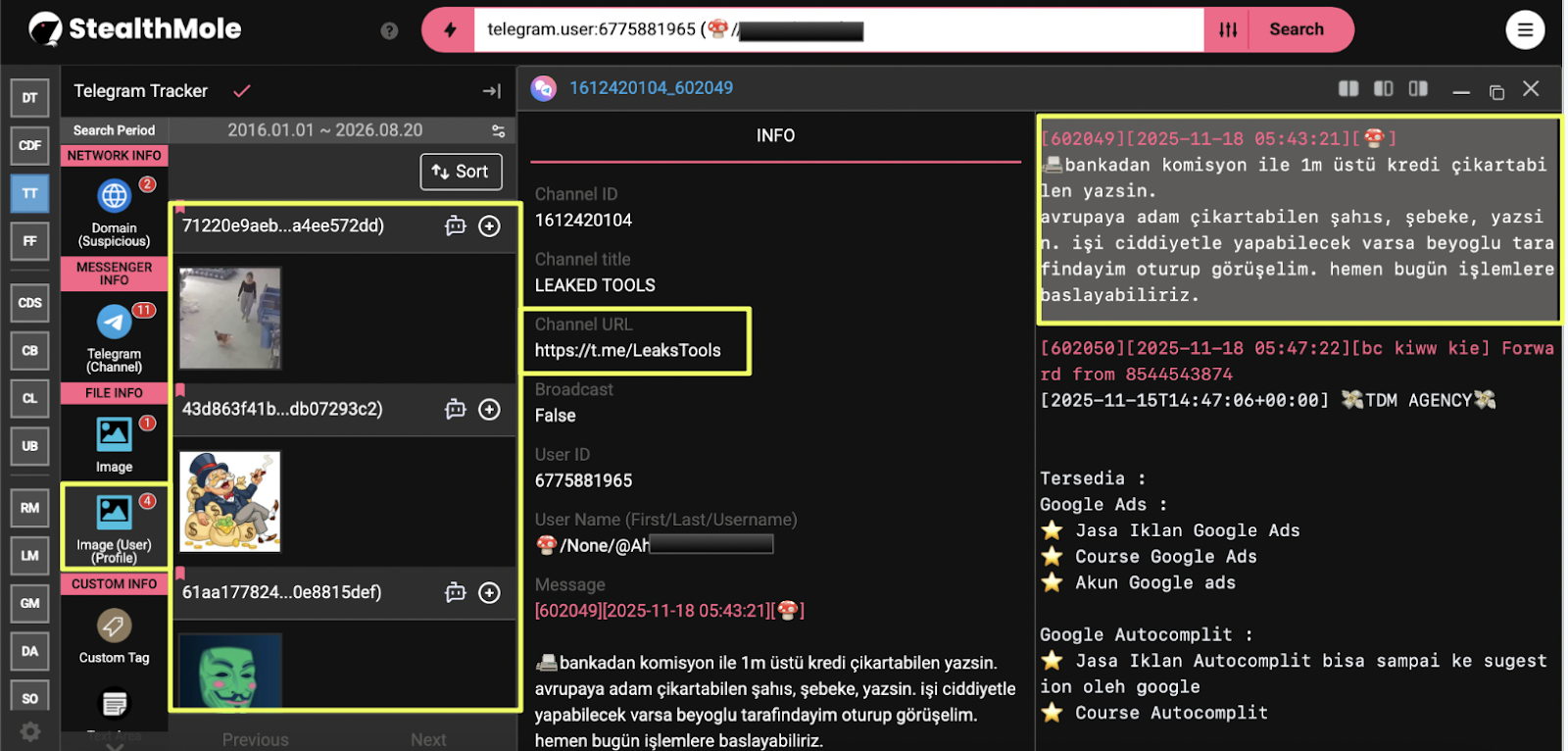
StealthMole’s historical indexing also gave us a glimpse of activity that predated the current Mushr00w identity. In November 2025, the account was using @Ah*******z and posted a message in Turkish referring to arranging a bank loan of more than one million for a commission, finding people or a network able to get people to Europe, and meeting in Beyoğlu to begin immediately. The message is interesting as a potential language and geographic lead, but it does not by itself establish that the account holder was in Turkey or that they actually carried out any of the activities described.
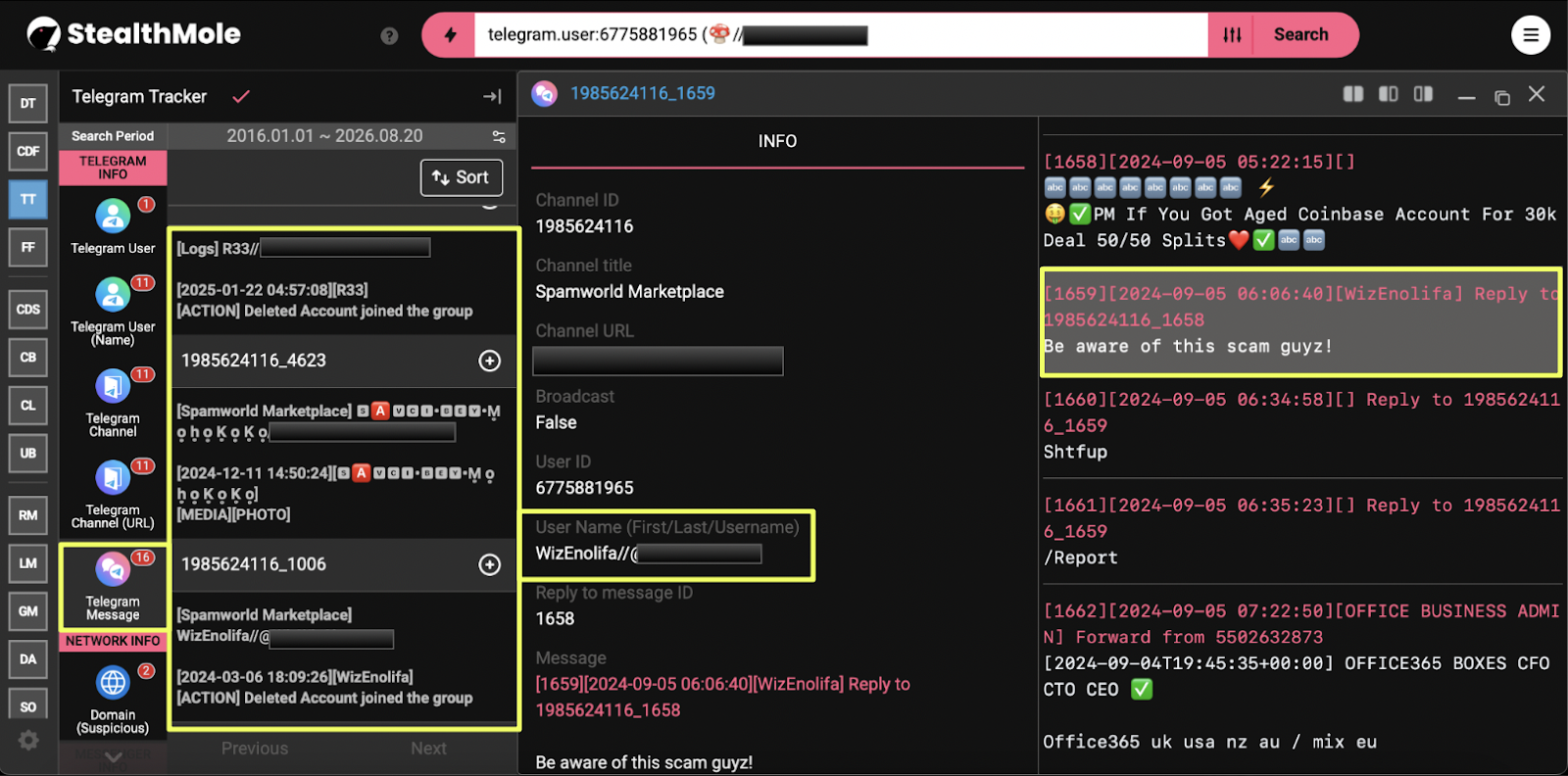
The account history also contained other signs of underground activity. A September 2024 message under @Wiz*****q warned others about a supposed scammer, while another message from May 2026 asked whether anyone had a free WordPress exploit. These older messages were not enough on their own to explain who Mushr00w was, but they showed that the Telegram account had been active in underground conversations well before the current name appeared.
Inside the ZeroDay Counter

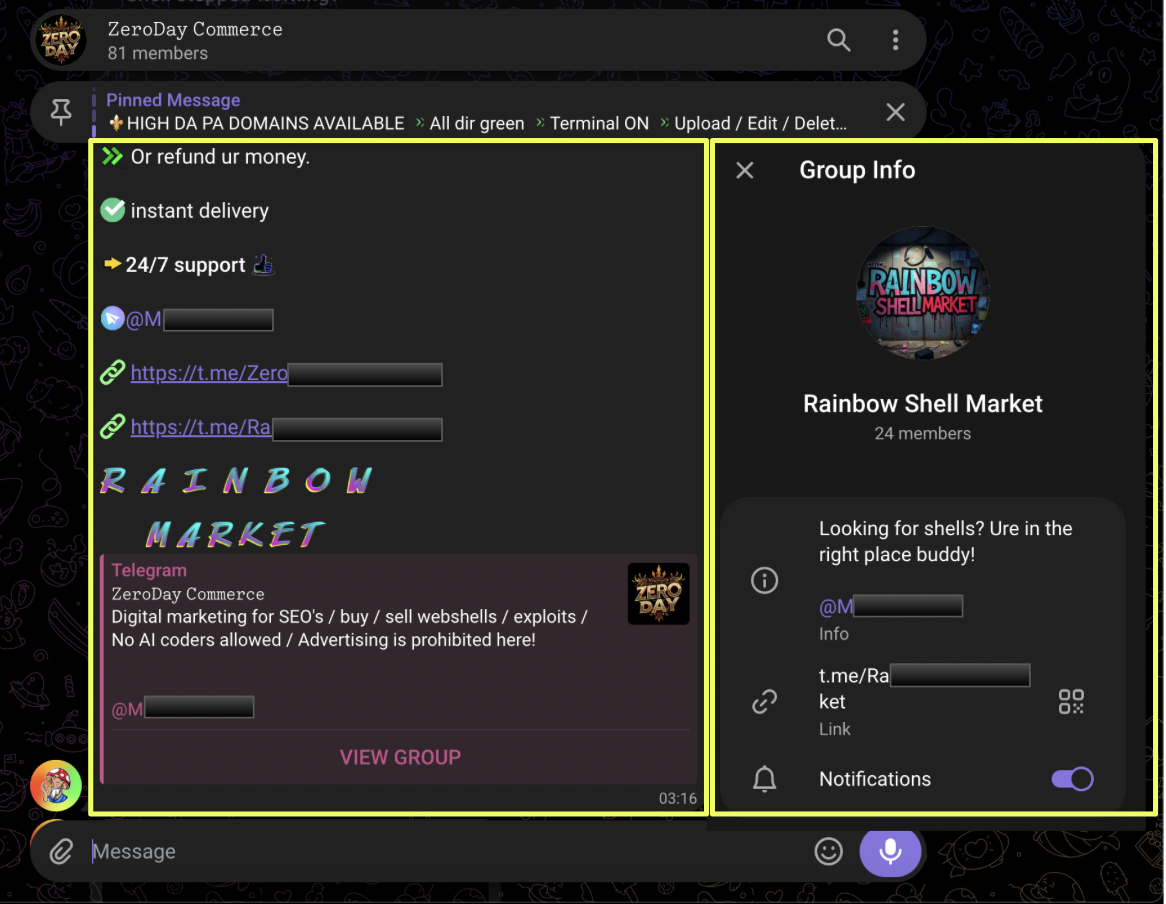
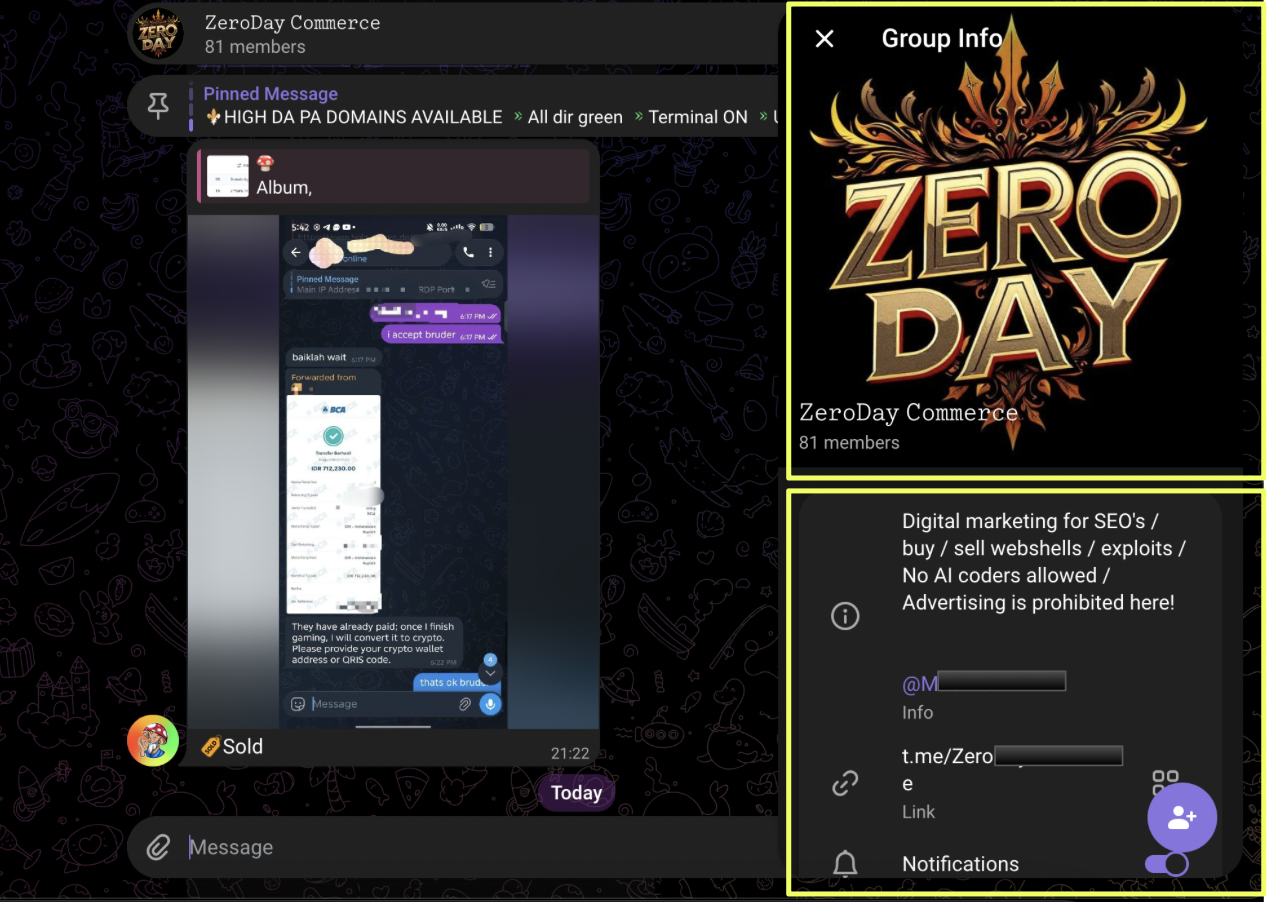
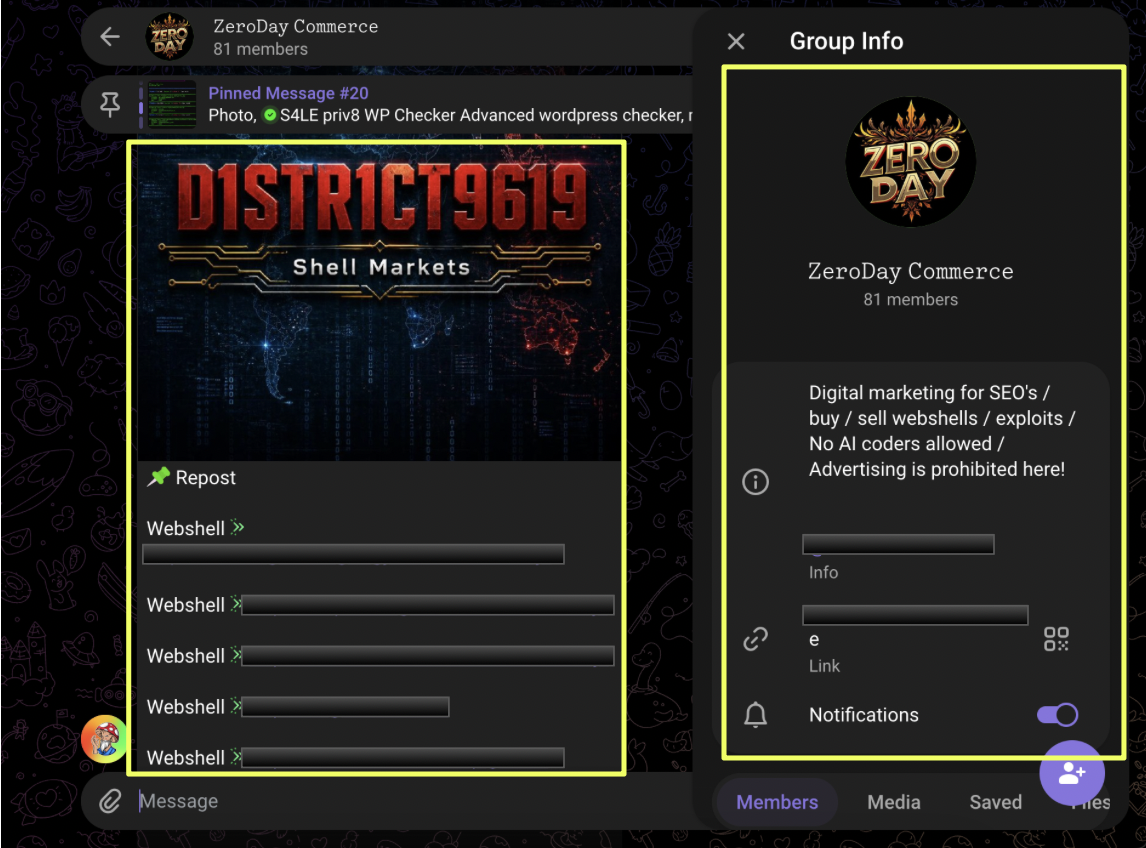
Following the link in Mushr00w’s Telegram bio led to ZeroDay Commerce, a private Telegram community with around 80 members. The group description leaves little doubt about what it is built around: “Digital marketing for SEO's / buy / sell webshells / exploits / No AI coders allowed / Advertising is prohibited here!” Mushr00w is listed in the group information, putting the account directly inside the community rather than simply appearing as another member.
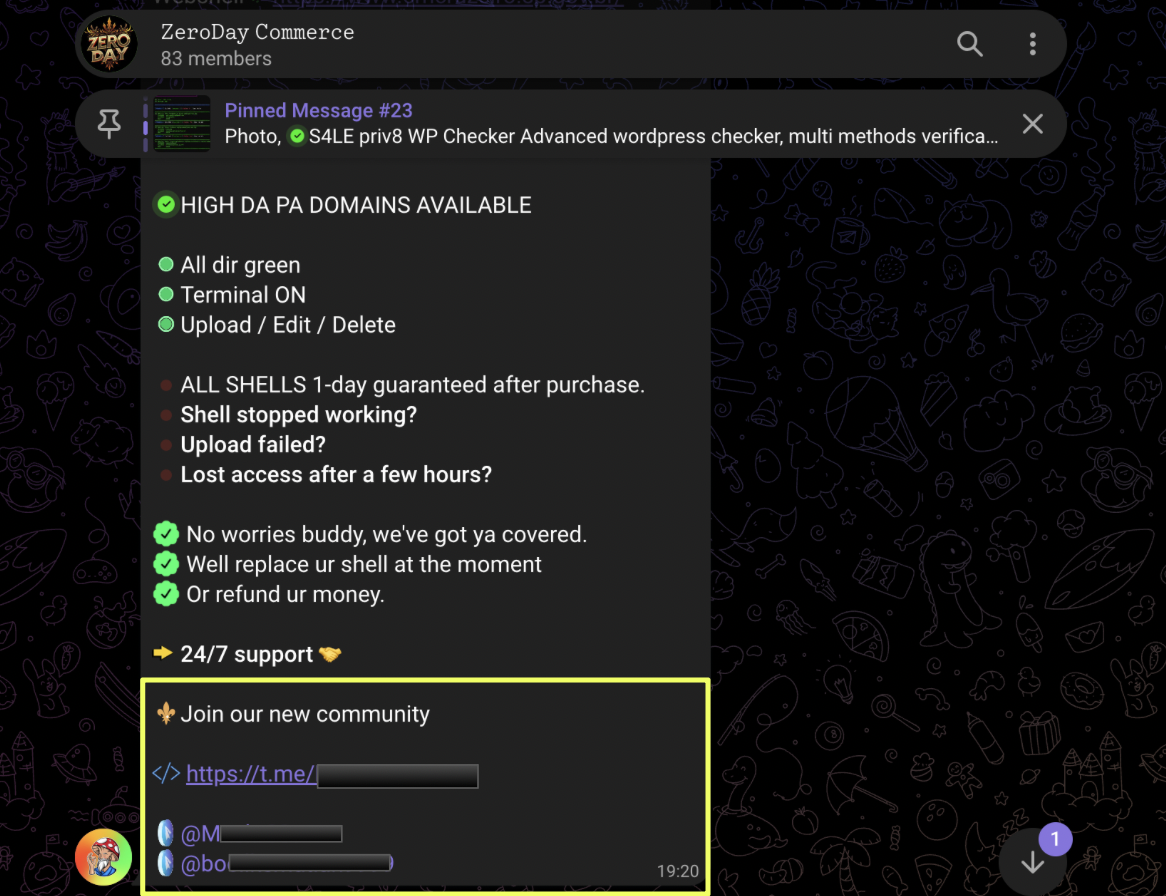
The messages inside the group make the purpose of the community clearer. Webshell access was being advertised for specific websites, including https://petofi10miskolc.edu.hu/ and https://www.rmc.edu.my/, with the latter offered as “Webshell + Admin access.” Other posts advertised “HIGH DA PA DOMAINS AVAILABLE”, along with claims that shells had terminal access and could be used to upload, edit and delete files. Sellers also advertised replacement or refund support and a one-day guarantee after purchase.
One of the posts described the service in more direct terms: “We are more than just a seller”, followed by a claim that the group provided reliable shells, support and solutions to buyers. The contact details attached to these advertisements repeatedly included @M*****w and @boc********9.
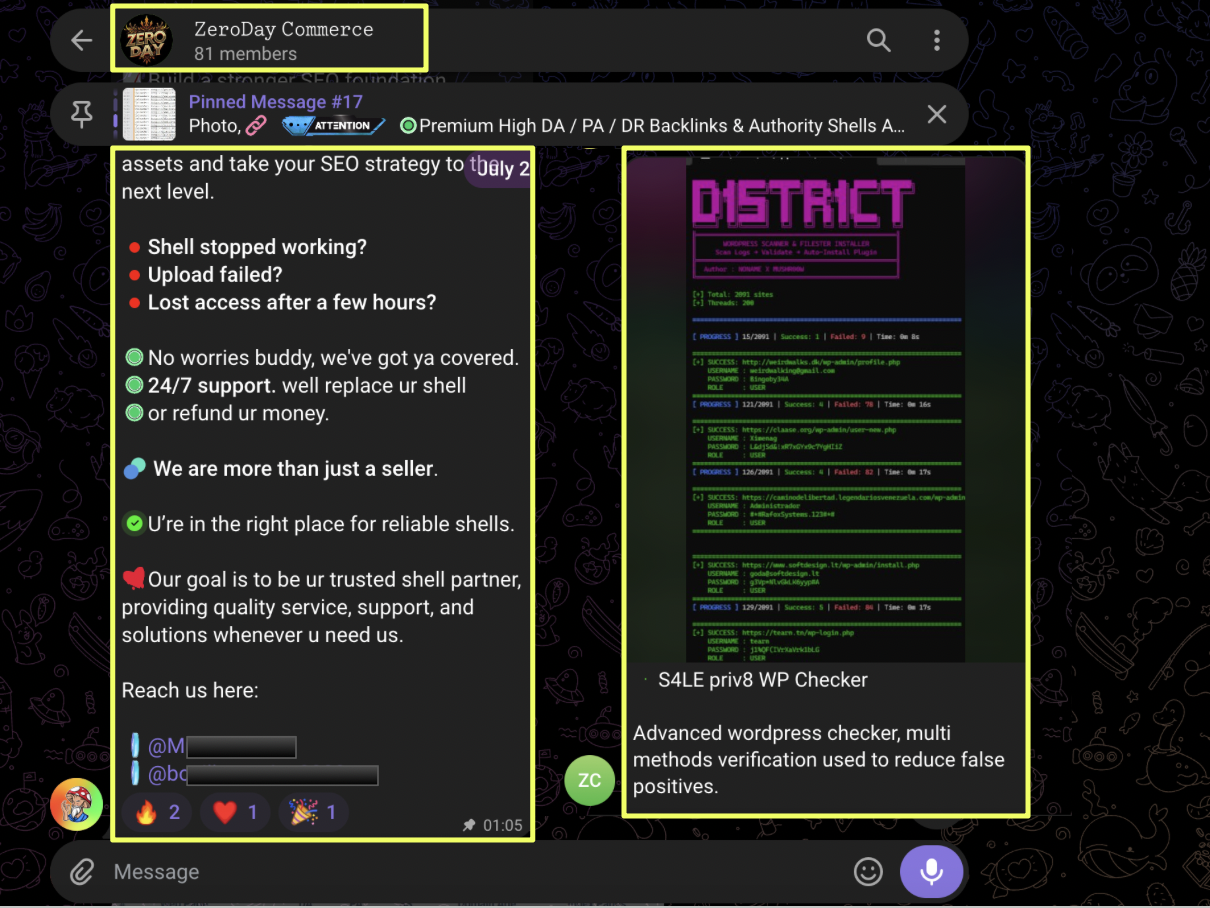
The group was not limited to individual shell listings. Another post promoted a “S4LE priv8 WP Checker”, described as a tool capable of live site validation, automated login, plugin installation and user-role detection. Whether every capability advertised actually worked as claimed cannot be established from the posts alone, but the advertisement itself shows the type of tools being offered alongside shell access.

The same activity also appeared outside ZeroDay Commerce. StealthMole’s Telegram Tracker returned messages posted under the Mushr00w identity advertising shell access for edu.co, edu.mx, gov.au and gov.my domains. One post offered random shells for $2 each and stated that escrow was accepted. Another specifically claimed “ALL ROOT DIR / NOT SUBDOMAINS!” and again directed potential buyers to @M****w.
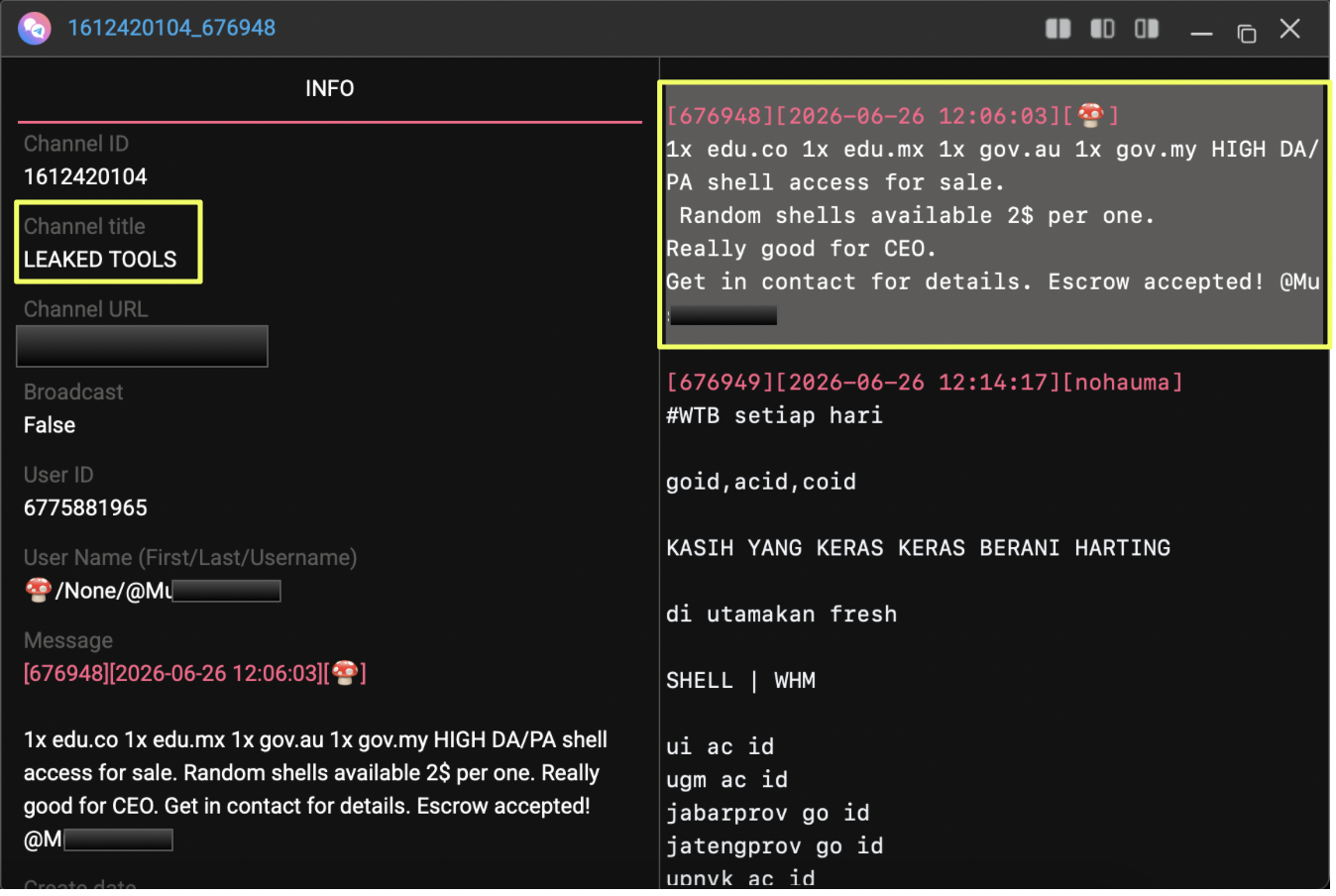
These posts are important because they show that the shell-selling activity was not limited to a single advertisement inside one private group. The same identity was being used to promote access elsewhere on Telegram. At the same time, the domains mentioned in these advertisements should not be mistaken for infrastructure owned by Mushr00w. The evidence shows them as systems for which shell access was being advertised, not proof that Mushr00w owned those domains or personally compromised them.

There was also another community connected to this activity. Rainbow Shell Market had Mushr00w listed as its contact and linked back to ZeroDay Commerce. Its description openly invited users looking for shells to join. Together, the two communities show a small but connected marketplace around the sale and promotion of webshell access, with Mushr00w positioned at the centre of the activity observed in the available evidence.

  • https://t.me/Ra***********t

When Business Turns Personal

The activity around ZeroDay Commerce was not without friction. One of the accounts repeatedly appearing alongside Mushr00w in the shell advertisements was @boc*******9. The two accounts were presented together in posts offering shell access and related services, suggesting that they were working within the same commercial space.
That relationship later broke down publicly.

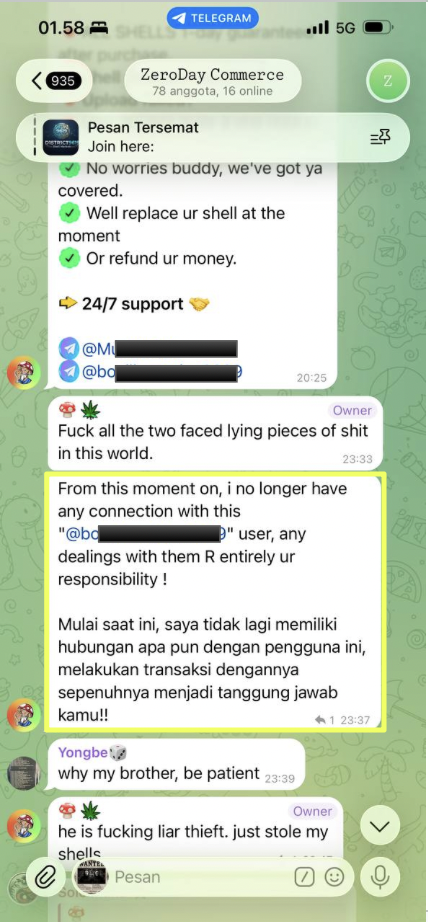
In a message posted through the ZeroDay Commerce community, the account identified as the owner announced that it was no longer connected with @bo******9 and warned others that any future dealings with the account would be their own responsibility. The message went further, accusing him of being a “liar thief” and claiming that he had stolen a shell. Another member, Yongbe, responded by asking him to be patient, showing that the dispute was taking place in front of other members of the community rather than in a private exchange.
The accusation was later answered by @bo*******9 through D1STR1CT9619, a community project that was also being used to share the dispute. His version of events was very different. He said he had been accused of stealing shells after an RDP he had purchased for Mushr00w developed problems. According to his account, Mushr00w believed that he had changed the RDP password and taken the shells, while he claimed that the RDP had actually been flagged because of misuse. He also denied taking shells for personal use and said he had refused to share proceeds from their sale.
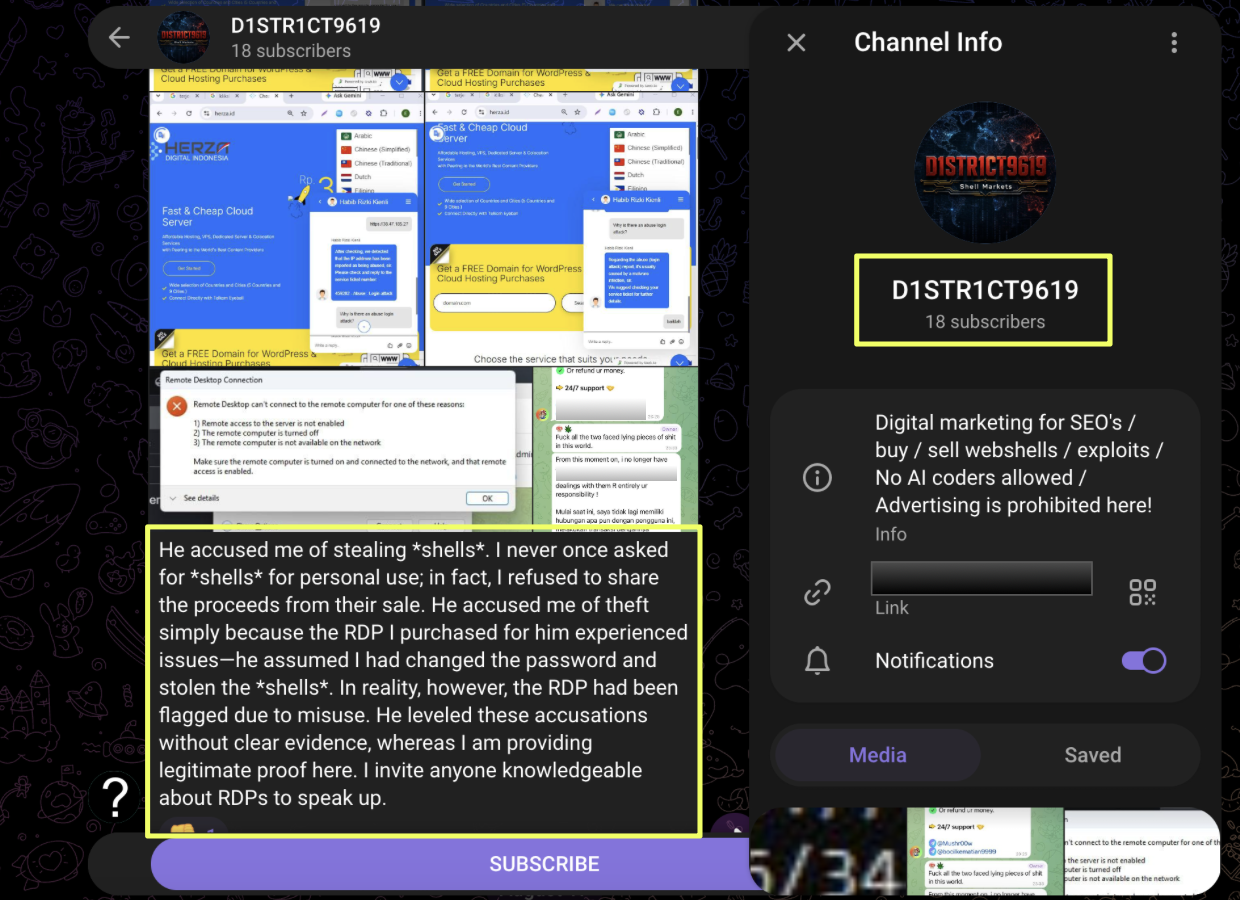
Neither side's account can be independently established from these messages alone. What the evidence does establish is that Mushr00w and @bo********9 had previously been operating in the same shell-selling environment and that their relationship later ended in a public dispute over shell access and an RDP.

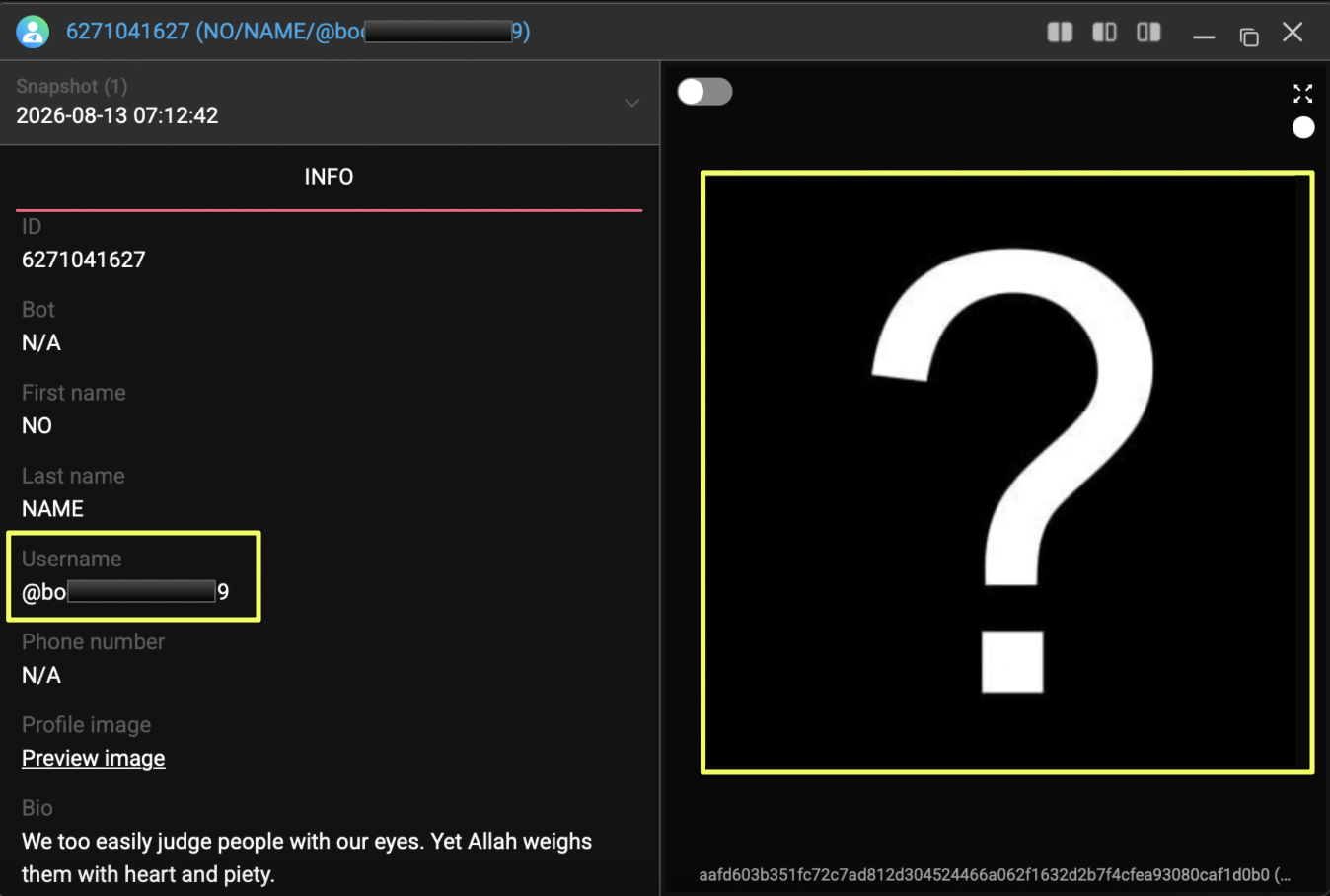
StealthMole's profile search on @bo********9 provided little additional information. The account is associated with Telegram ID 6271041627, uses the name “NO NAME”, and has no visible phone number or other identifying information. Its limited profile data therefore does little to resolve the dispute, but the activity surrounding the account gives us a clearer picture of its connection to Mushr00w than the profile itself does.
The fallout is useful for another reason. It gives us a glimpse into how these shell operations appear to function behind the advertisements: access is acquired through RDPs, shells have commercial value, and disagreements over control of that access can quickly become disputes within the same underground community.

The People Around the Seller

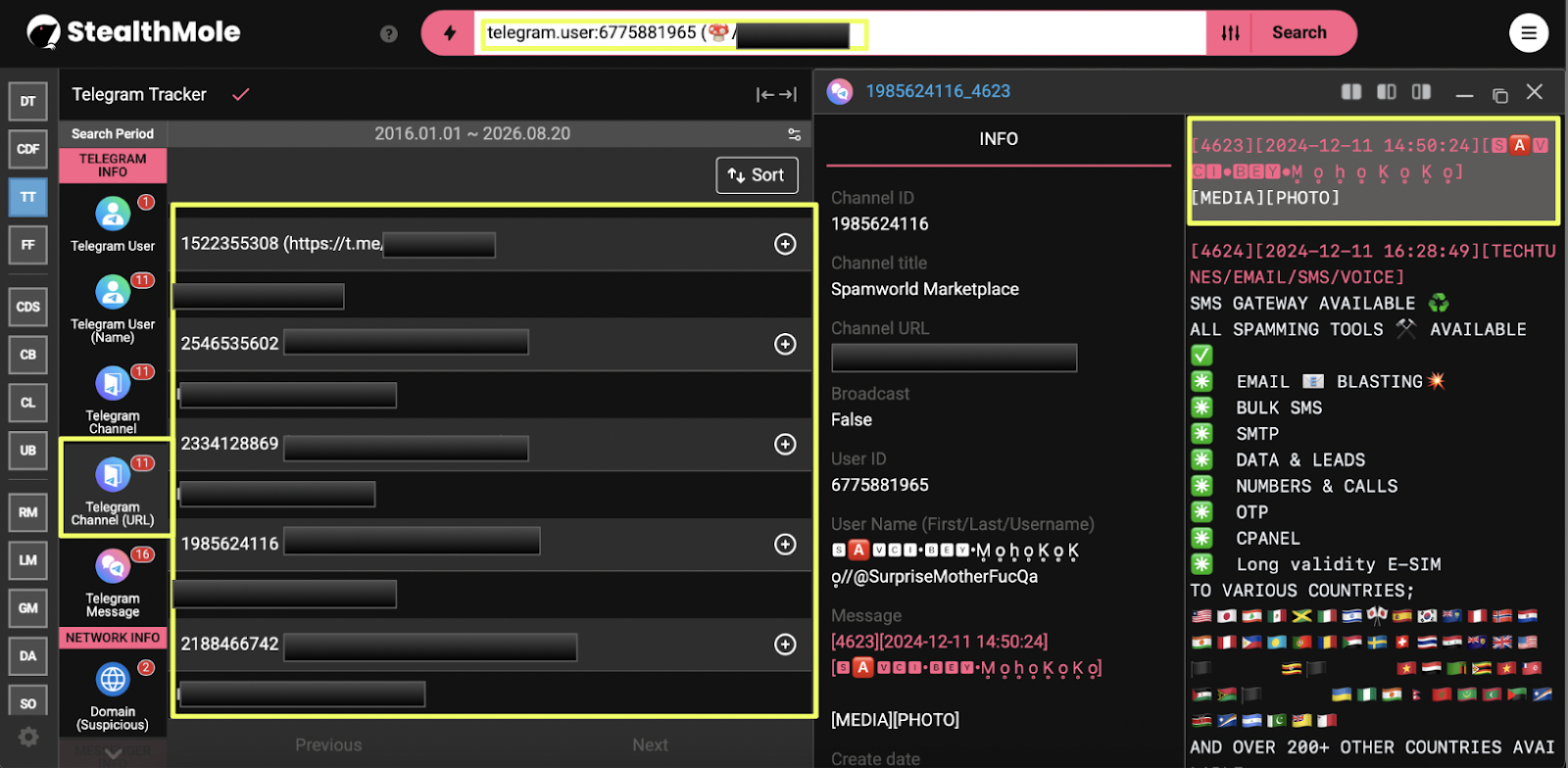
The deeper Telegram search showed that Mushr00w’s activity extended beyond ZeroDay Commerce. StealthMole linked Telegram ID 6775881965 to activity across 11 Telegram channels, with additional messages appearing in other groups and channels. This broader footprint made it possible to look at the people appearing around the account rather than treating Mushr00w as a standalone seller.
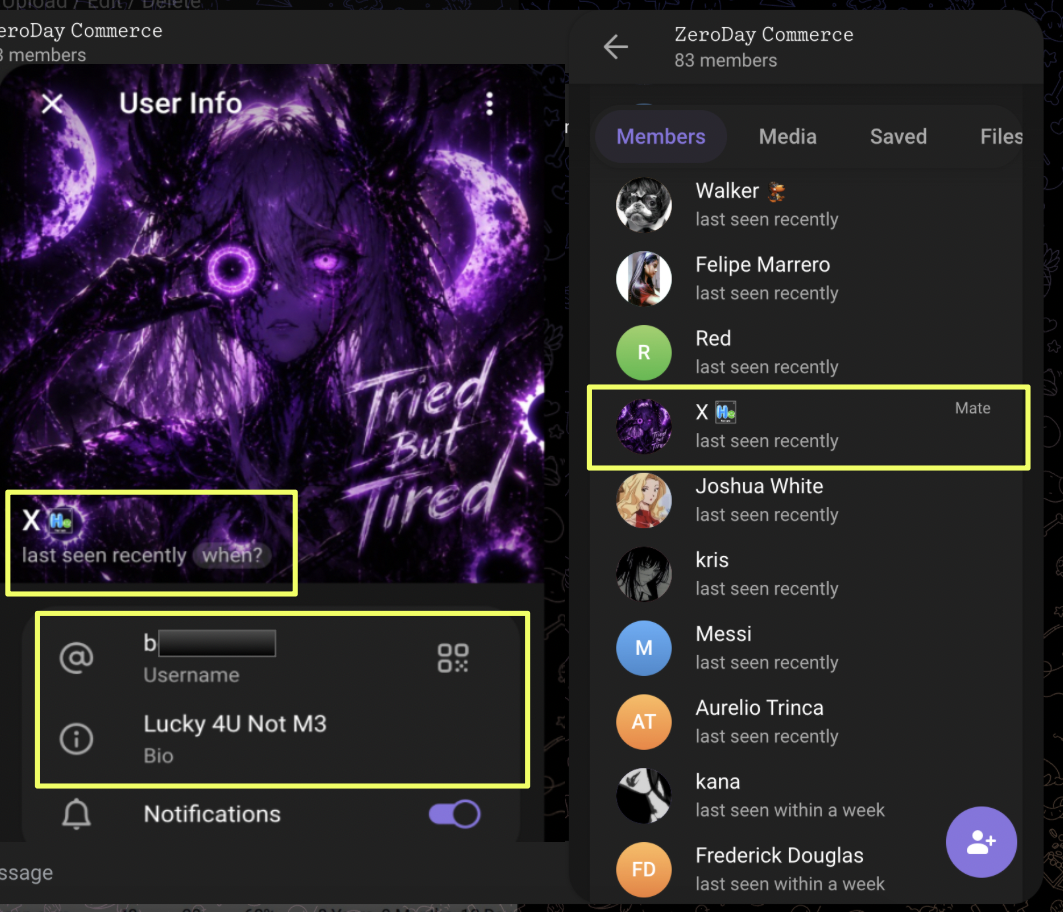
One of the clearest connections was @be*******u. In the ZeroDay Commerce member list, the account is explicitly marked as “Mate.” Its profile shows the display name X, username @be*******u, and the bio “Lucky 4U Not M3.” The “Mate” designation does not tell us exactly what role the account played, but it does establish that the account held that label within the community.
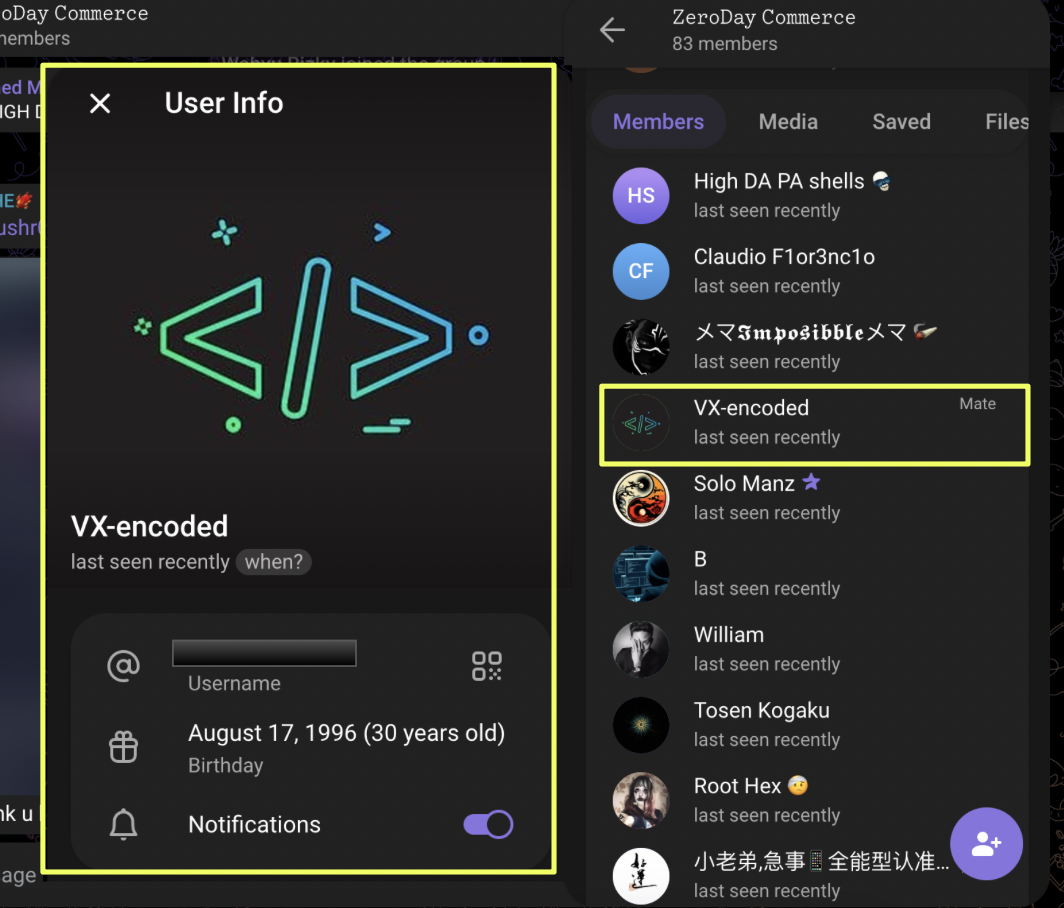
Another account, VX-encoded, also appeared as a Mate in ZeroDay Commerce. StealthMole identifies the account as @b*******d, Telegram ID 8256413322. Its profile contained a direct reference to the community in its bio: Direction: https://t.me/Zero********e. This provides a separate profile-level connection between VX-encoded and the same community surrounding Mushr00w.
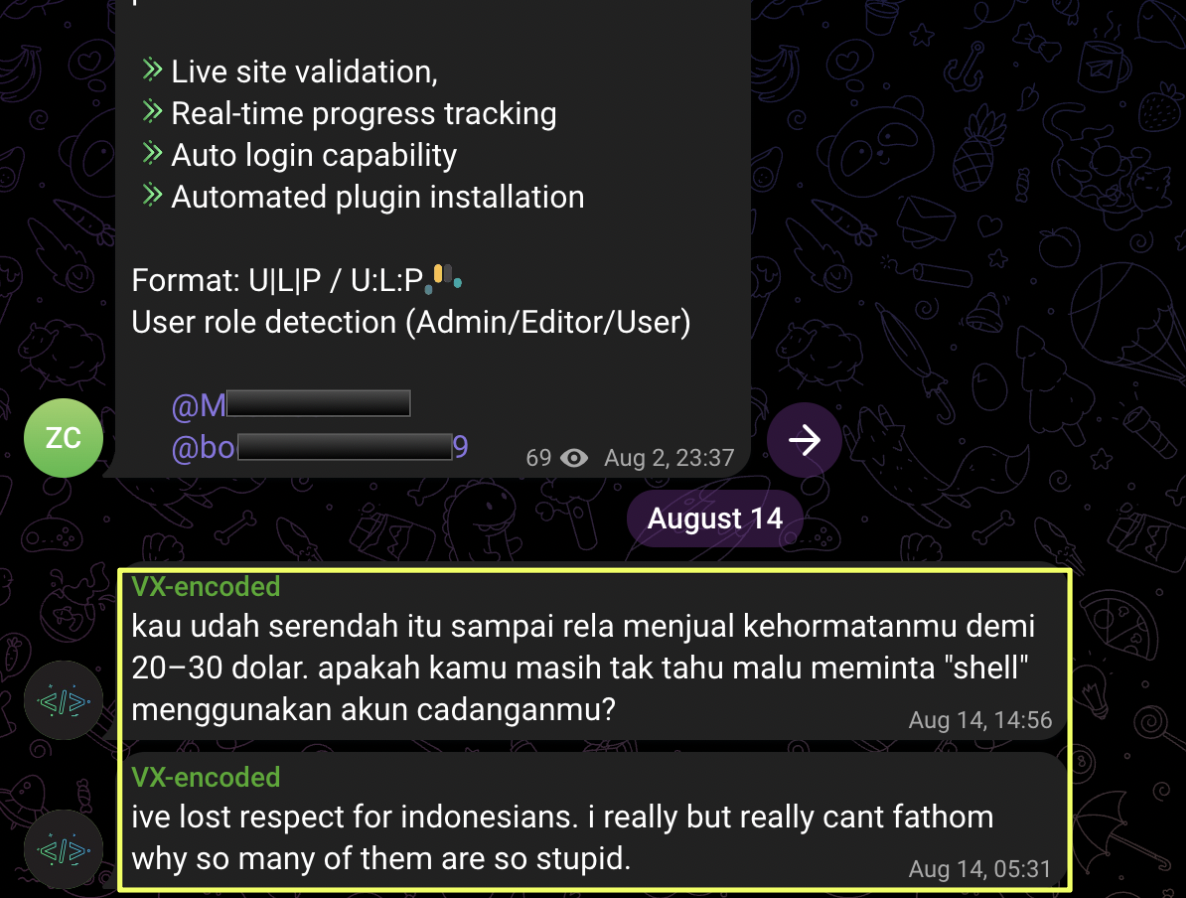
VX-encoded also appeared in a conversation involving shell access. One message, written in Indonesian, questioned why someone would sell their dignity for 20–30 dollars and referred to asking for a “shell” through a backup account. VX-encoded then wrote that he had “lost respect for Indonesians" and questioned why so many of them were “stupid.” The exchange is useful for understanding the conversations taking place around shell access, although it does not identify the person being addressed or establish that VX-encoded was involved in the transaction being discussed.
Together, the Telegram data shows that Mushr00w was operating within a wider group of users rather than in isolation. Some relationships were visible through commercial posts, others through community roles, and others through the conversations taking place around shell access. The network was therefore larger than the Mushr00w account itself, even if the precise role of every person around it cannot be established from the available evidence.

Beyond the Network

The Telegram investigation was not the only place where the same name appeared. A separate OSINT search surfaced a profile:

  • https://gitlab.archlinux.org/M*******w

The username is notably similar to the name used by the Telegram account, but that similarity alone is not enough to connect the two.

At the time of the investigation, the GitLab profile could not be examined further because access to the page was restricted. There was also no additional evidence available from the search that tied the account to Telegram ID 6775881965, ZeroDay Commerce, or any of the other identifiers already associated with Mushr00w.

For that reason, this lead remains separate from the main attribution chain. It is worth recording because the username is distinctive enough to warrant further checking, but there is currently no basis for presenting the GitLab account as belonging to the same person behind @M*****w.

This is also a useful reminder of one of the problems with tracking underground identities. A familiar username can point toward the right person, but it can just as easily belong to someone else. In this case, the Telegram evidence provides a much stronger foundation because several different usernames are tied to the same Telegram ID, while the GitLab account currently has no such link.

Conclusion

The investigation began with two website defacements carrying the Mushr00w name and a Telegram address that opened the door to a much wider footprint. StealthMole’s historical Telegram data then connected Telegram ID 6775881965 to multiple previous usernames and eventually to @M*****w, whose profile pointed directly to ZeroDay Commerce.

From there, the evidence became more consistent. ZeroDay Commerce and related Telegram communities were being used to promote and sell webshell access, while Mushr00w appeared repeatedly in those activities. The investigation also identified other accounts around the operation, including @bo******9, @be*****u and VX-encoded, although the exact role of each person is not equally clear. The public dispute with @bo********9 also showed that these relationships could change quickly when access and money were involved.

Overall, the available evidence supports viewing Mushr00w as an active participant in a Telegram-based webshell marketplace, with a history that extends beyond the current username and activity across multiple connected communities. At the same time, some leads remain unresolved, including the real-world identity behind the account and the relationship between Mushr00w and the separate Arch Linux GitLab profile.

Editorial Note

Dark web identities rarely stay consistent for long, and attribution is often built from fragments rather than a single definitive piece of evidence. In this case, usernames changed, relationships shifted, and some claims made by the actors could not be independently verified.

StealthMole helped bring those fragments together, allowing the investigation to follow the same account across historical identities, defacement activity and Telegram communities while keeping the uncertain parts of the picture separate from the findings that could be supported.

To access the unmasked report or full details, please reach out to us separately.

Contact us: support@stealthmole.com


Labels: , ,

Inside 0Day Today: Infrastructure, Mirrors, and Exposure Patterns

The platform 0day.today occupies a persistent space within the online exploit ecosystem. For years, it has circulated through cybersecurity discussions, darkweb resource lists, and archived exploit catalogs, often referenced, rarely explained, and almost never examined in a structured way. This report takes a step back from assumptions, focusing instead on what can actually be observed about the platform through StealthMole. Rather than treating 0day.today as a marketplace, we approached it as an open question: What does this platform look like when analyzed across the surface, deep, and dark web using real, captured evidence?

The goal of this investigation is not to validate the authenticity of any exploit claims but to understand the platform’s visible footprint: how it presents itself, where it appears, and what kinds of digital traces emerge when its domains, mirrors, and identifiers are examined. Using StealthMole, the platform was observed across multiple contexts, including its web-facing structure, associated mirrors, user-facing touchpoints, and external references scattered across community spaces. Each dataset provided a different perspective, and together they form a more complete picture of how 0day.today functions within the wider ecosystem.

This report organizes those findings into a clear analytical narrative. Subsequent sections walk through the discovery path, highlight the platform’s observable infrastructure, and outline the various signals connected to it across multiple data sources. By approaching 0day.today in this evidence-first manner, the analysis aims to give readers a grounded understanding of the platform’s presence, setting the stage for deeper insights in the sections that follow.

Incident Trigger & Initial Investigation

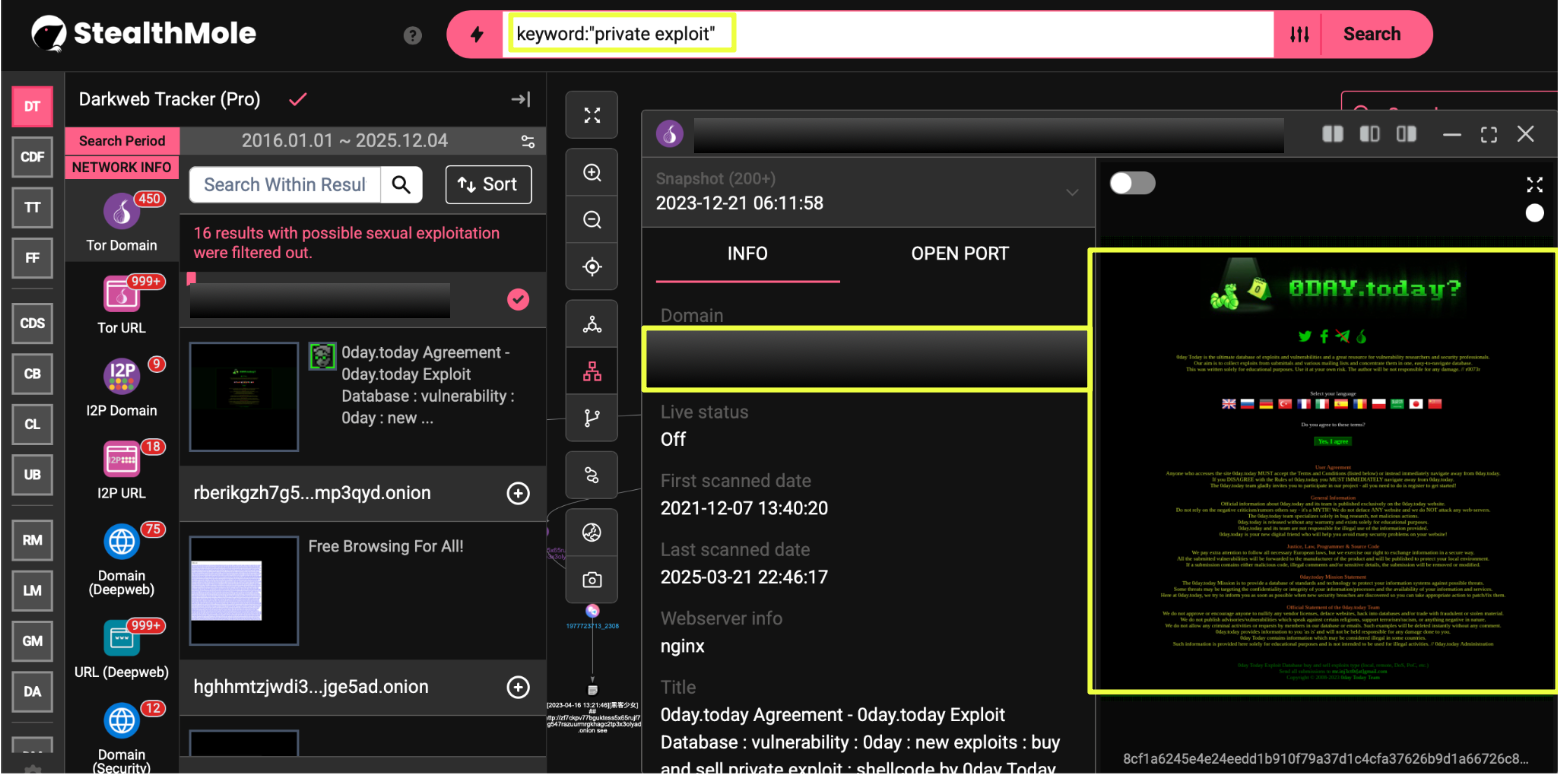
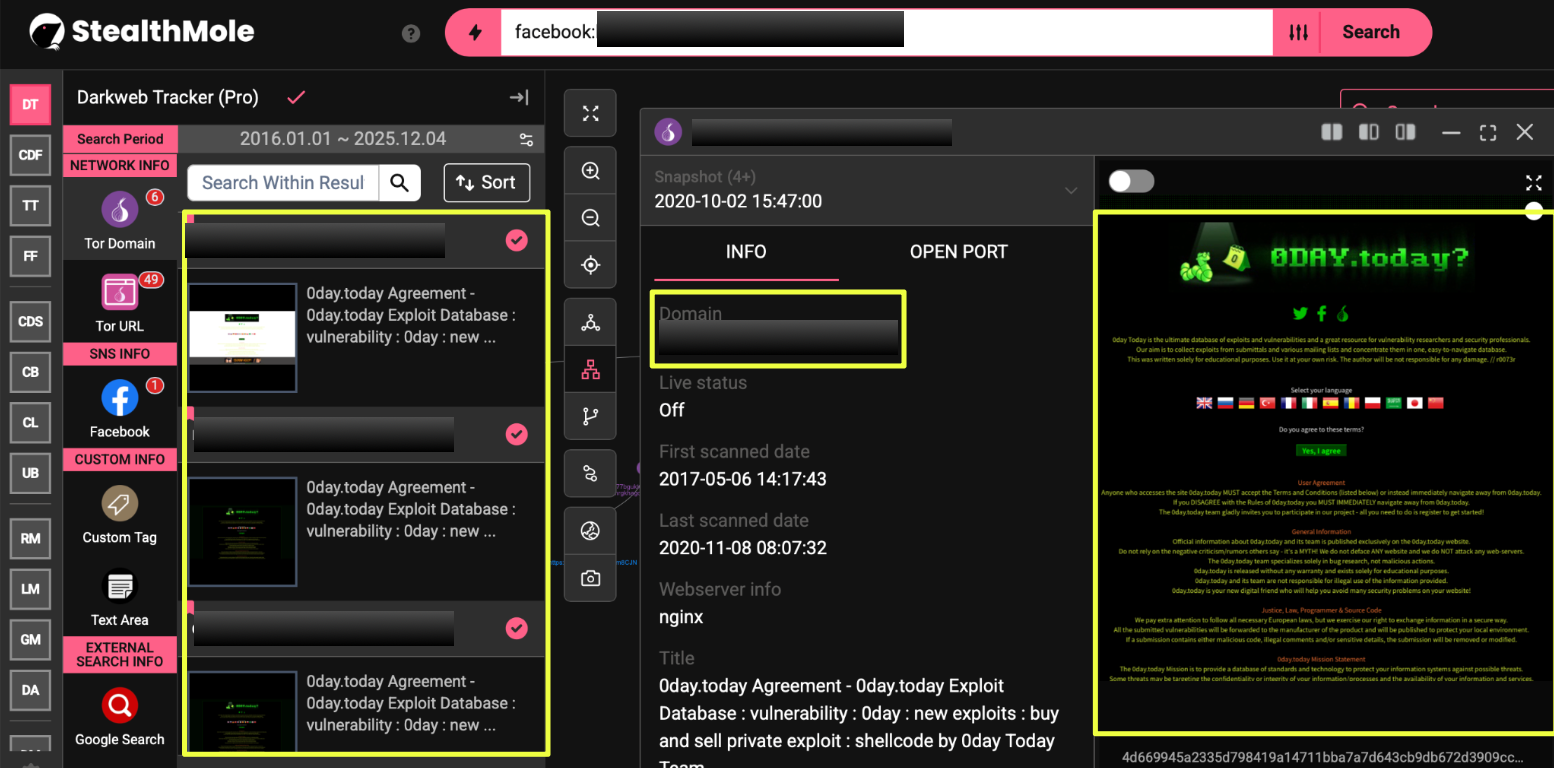
The investigation began with a broad inquiry into how “private exploit” offerings surface across dark web, particularly those that position themselves as repositories or distribution points for unpatched vulnerabilities. The goal at this stage was simply to observe which platforms or services appeared repeatedly when actors discussed obtaining exploit code outside formal disclosure channels. During this sweep, StealthMole’s Darkweb Tracker surfaced a Tor-hosted address, identifying itself as a gateway to a platform called 0day.today. The appearance of this domain was notable because it emerged organically through dark web indexing rather than from deliberate targeting, prompting a closer look at what the service actually represented.

  • sq542*************************************************3id.onion

The initial task was to understand the nature of the onion site itself: whether it functioned as an active service, a mirror of a known platform, or a static artifact left behind from a previous operational period. Using StealthMole, the domain was queried to capture its landing structure, visible content, and any immediate patterns observable from the pages accessible through the onion service. At this stage, the objective remained intentionally broad: to determine how the platform presents itself within the Tor environment and whether it is part of a larger ecosystem.

As the onion link was explored, additional related paths surfaced through StealthMole, revealing that the platform did not exist solely as a single darkweb instance. Instead, several additional domains and language-specific entry points began to appear, suggesting a distributed or mirrored layout rather than a standalone service. These early findings set the direction for the rest of the investigation, indicating that what initially appeared as a single Tor resource might represent a wider footprint spanning multiple access points.

Infrastructure Mapping

Once the presence of the onion domain was established, the next step was to understand how this resource fit into the broader structure of the platform it referenced. Using StealthMole, the onion link was expanded outward to identify any additional mirrors, language variants, or structural patterns associated with the platform. This process quickly revealed that the service was not confined to a single entry point; instead, it appeared as a distributed network of URLs that consistently mirrored the same presentation, layout, and messaging.

  • sq542***************************************************3id.onion

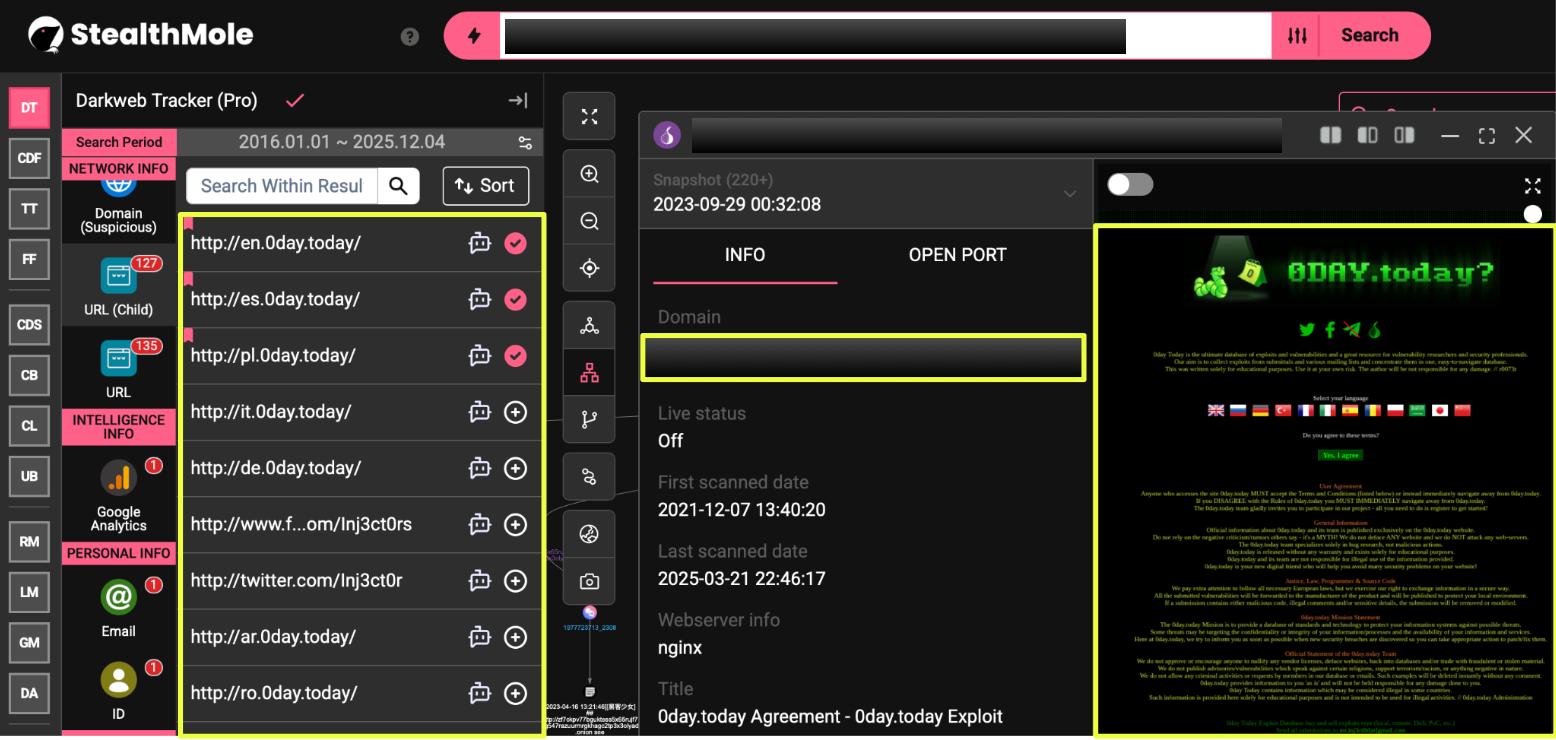
Multiple language-specific subdomains emerged during this phase, including:

  • http://en.0day.today
  • http://es.0day.today
  • http://pl.0day.today
  • http://fr.0day.today
  • http://it.0day.today
  • http://ru.0day.today
  • http://tr.0day.today
  • http://ro.0day.today
  • http://cn.0day.today
  • http://de.0day.today
  • http://jp.0day.today.

Despite their regional labels, each instance displayed nearly identical content and messaging, suggesting that the platform relies on a template-based mirroring structure rather than localized or independently maintained deployments. The website showed consistent HTML size, visual design, and disclaimers across these domains, reinforcing the impression of a single platform replicated across multiple language fronts.

Alongside the clearweb subdomains, additional Tor-based mirrors also surfaced during the mapping phase. These domains displayed the same structural characteristics and branding.

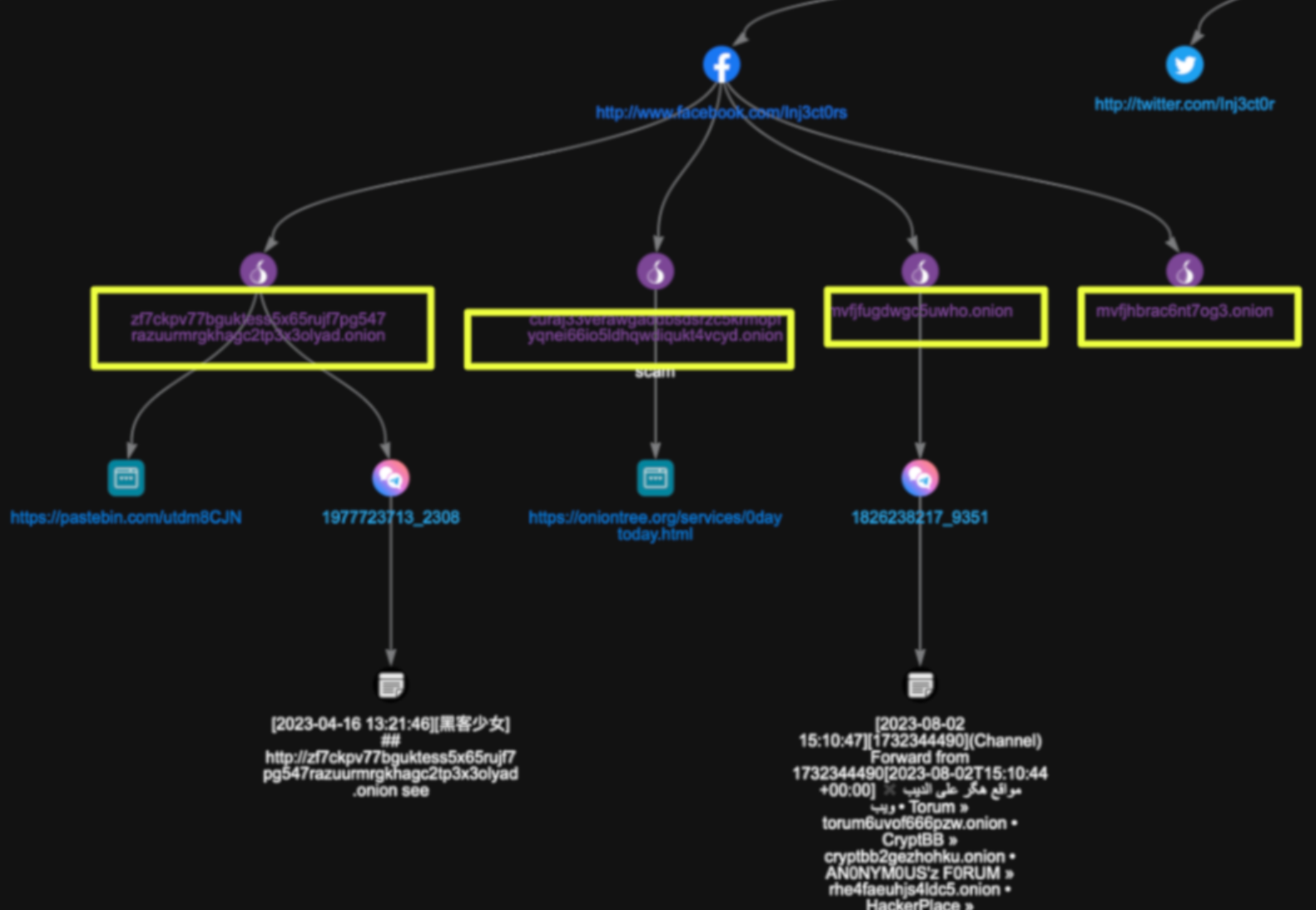
  • Zf7c*************************************************yad.onion
  • Cura*************************************************cyd.onion
  • Mvf****************o.onion
  • Mv****************g3.onion

Some of these onion links were also referenced in external community spaces, such as Telegram channels and Pastebin posts, indicating that the mirrors were known among users even if no official communication confirmed their provenance.

The consistency across both clearweb and darkweb versions suggested that 0day.today functions through a wide but shallow distribution model: a single platform presented through numerous access points with minimal differentiation between them. This structure provided a foundation for the subsequent analysis, enabling the investigation to move from identifying where the platform is hosted to examining how it is referenced, used, and exposed across various datasets.

Platform Identity and Public-Facing Elements

As the platform’s distributed infrastructure became clearer, the investigation turned toward cataloging the elements that 0day.today publicly associates with its identity. These artifacts were identified through StealthMole, where recurring contact points, messaging handles, and social media links appeared consistently throughout the platform’s structure.

Multiple mirrored instances prominently listed mr.in******r@gmail.com as the contact point for submissions or proposals, while additional identifiers such as 1*****y@jabber.org and a*****@0day.today appeared across various pages linked to the site. These addresses were consistently embedded in the platform’s layout, indicating that they form part of the legacy communication channels tied to the 0day.today ecosystem.

Social media references, including facebook.com/I******rs and twitter.com/I******r, also appeared across several variants of the platform. Their repeated inclusion suggests that these profiles were intentionally aligned with the site’s public-facing identity, forming part of the broader Inj3ct0r/1******y branding visible in other mirrored pages.

An important detail emerged in parallel: several mirrored versions of the site included a clear statement that the platform does not maintain any presence on Telegram or other messenger services. This message was positioned prominently on certain landing pages, cautioning users about unofficial accounts impersonating the platform. While the platform distances itself from Telegram activity, this disclaimer also helped contextualize later findings where external actors referenced 0day.today independently of any official communication.

External References and Community Mentions

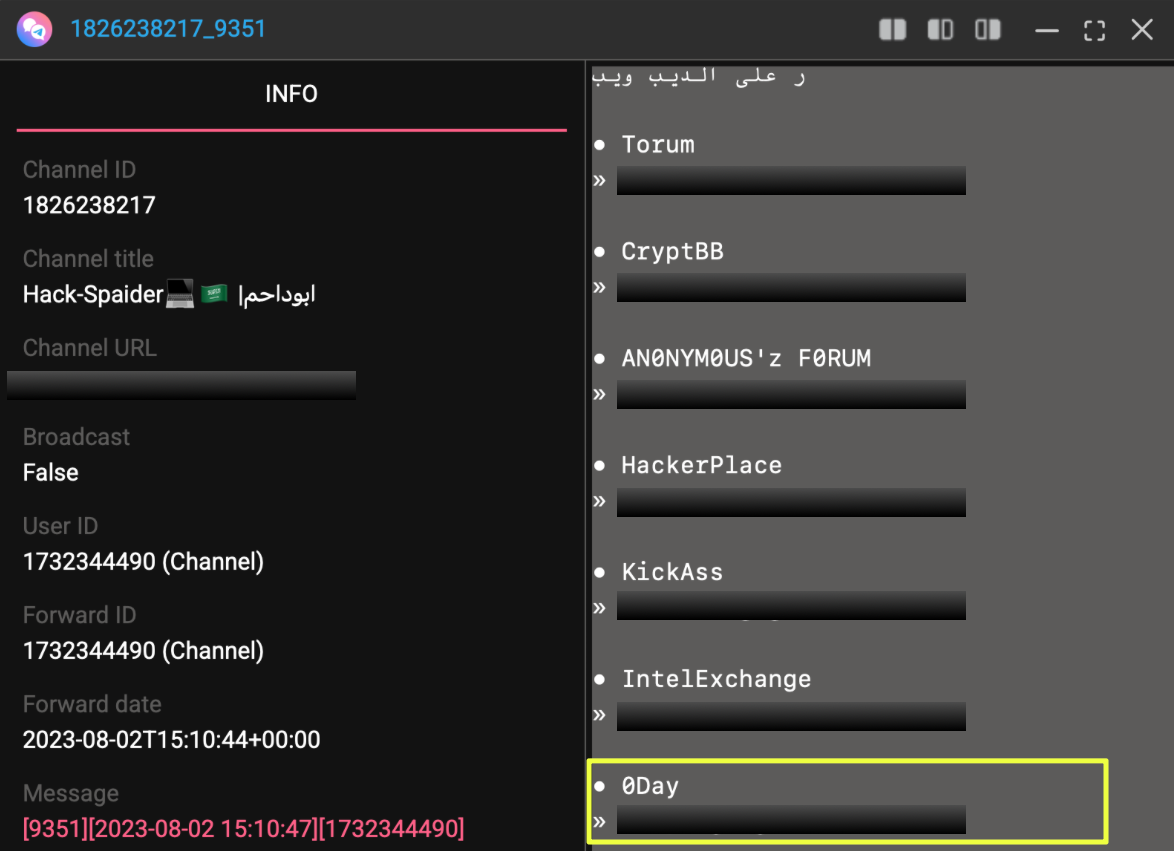
As the investigation broadened beyond the platform’s own hosted pages, we focused on how 0day.today appears in the wider ecosystem where users informally share, recommend, or archive exploit-related resources. Rather than looking for official communication from the platform, which it explicitly states it does not provide through Telegram or other messengers, this stage focused on understanding how its domains and mirrors circulate organically through user-driven spaces. StealthMole’s telegram tracking capabilities allowed these references to be traced across Telegram channels, paste sites, and darkweb, offering a view of the platform’s presence outside its self-maintained infrastructure.

It was found that several 0day.today mirrors are referenced across a range of Telegram channels, often as part of broader lists of dark web sites or exploit-oriented resources. For example, the onion address mvf**********ho.onion appeared in dozens of channel messages, typically alongside other well-known forums and marketplaces. These mentions were not framed as official announcements but as community-compiled lists, forwarded posts, or general resource compilations shared among users. Similarly, mirrors (see below) surfaced in Telegram references and external indexing sites, reinforcing that these variants circulate independently of any operator-controlled outreach.

  • zf7c*************************************************yad.onion
  • cura*************************************************cyd.onion

Additional references appeared on paste-sharing platforms, where StealthMole captured instances of mirror URLs included within broader collections of .onion links. These entries mirrored the structure seen in Telegram posts, informal lists curated by users rather than platform operators. Indexing services such as OnionTree also catalogued several mirrors, at times flagging them with cautionary notes, adding contextual information without altering the observable footprint.

Overall, these community mentions highlighted how 0day.today spreads through ecosystems shaped primarily by user activity. Despite the platform’s explicit statement that it does not maintain a presence on Telegram or messenger applications, its mirrors and subdomains emerge frequently across crowdsourced posts, resource lists, and archival references. These patterns offered additional avenues for analysis as the investigation progressed toward examining how the platform and its identifiers intersect with broader exposure datasets.

Compromised Credentials

To understand how 0day.today interacts with the broader data breach landscape, the platform’s domains and publicly associated identifiers were examined using StealthMole’s credential exposure tools. This phase aimed to determine whether the platform itself, its mirrors, or its declared contact points appeared in compromised credential collections, breach compilations, or historical leak datasets.

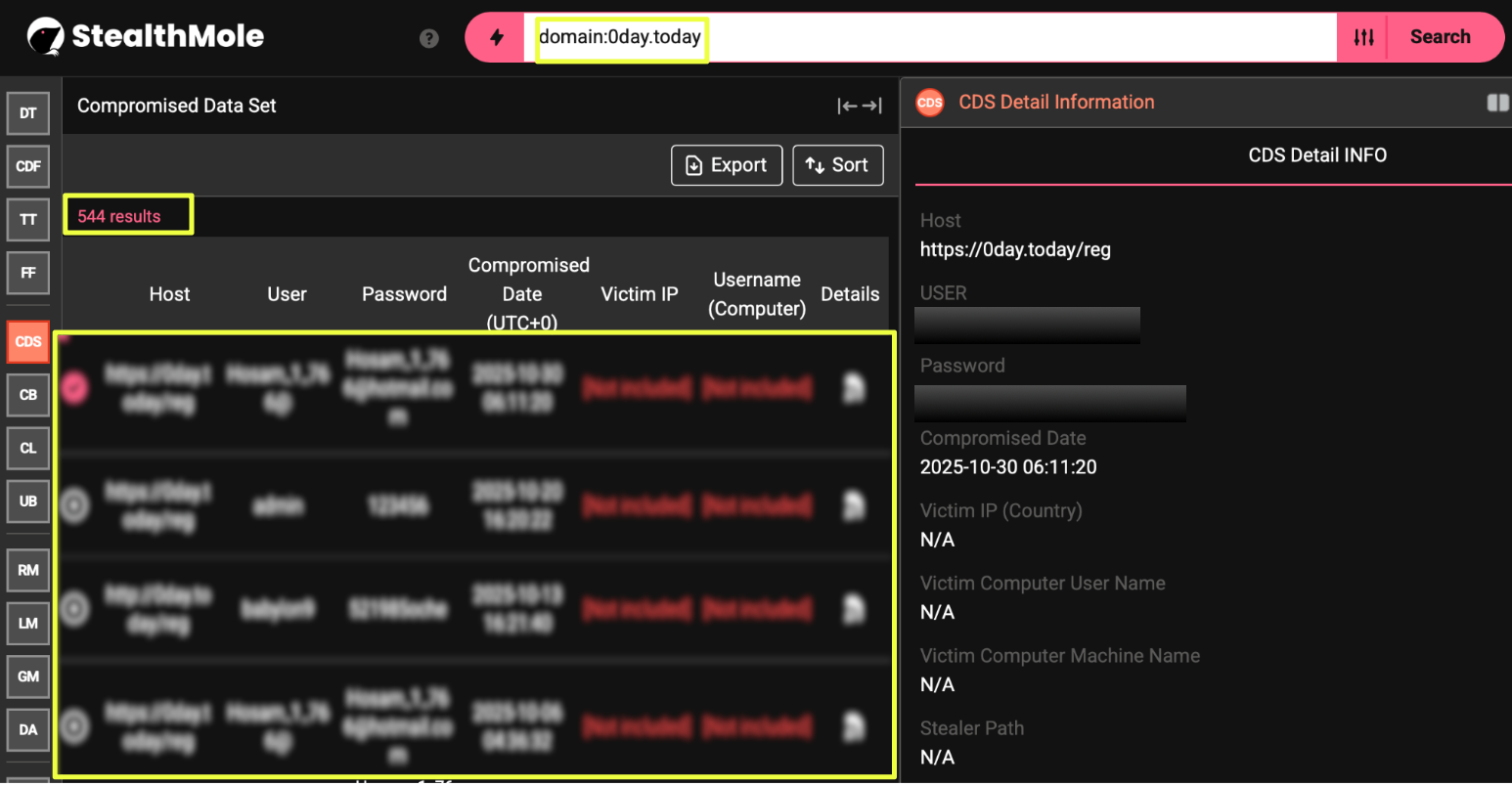
Running the primary domain 0day.today and its variants through StealthMole’s Compromised Data Set (CDS) revealed a significant number of entries linked to the site’s registration or login paths. Across CDS, more than five hundred results appeared for URLs such as https://0day.today, https://0day.today/reg, and their language-specific equivalents. These records reflected user credentials exposed through external breach events, indicating that individuals who created accounts on the platform later had their information captured in unrelated compromises. Additional entries surfaced through the ULP Binder, which produced several hundred more results tied to the same set of domains, further illustrating that the platform’s user base appears frequently within leaked datasets.

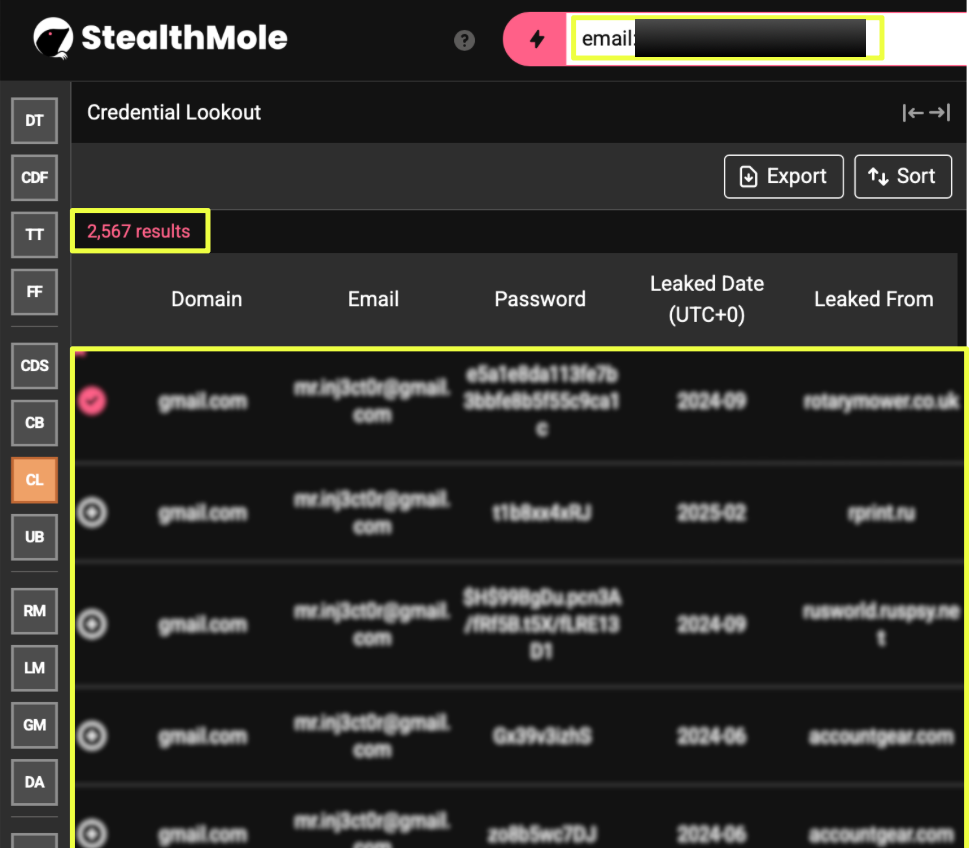
The platform’s publicly stated contact email, mr.in********r@gmail.com, was examined separately due to its repeated presence across multiple mirrored versions of the site. When queried through StealthMole’s Combo Binder and Credential Lookout, the address returned several thousand compromised entries spanning numerous unrelated third-party websites. These records reflected wide reuse of the email across different services and time periods, positioning it as a consistent point of exposure within historical breach data.

Assessment

The investigation ultimately positioned 0day.today as a legacy platform whose present-day footprint is fragmented across inconsistent infrastructure, outdated operator channels, and repurposed web content. What emerged through StealthMole was not the profile of an active exploit marketplace competing in today’s cybercrime economy, but rather a platform that continues to persist in traces: technically reachable, frequently referenced, and still indexed, despite showing no signs of ongoing maintenance or operational coherence.

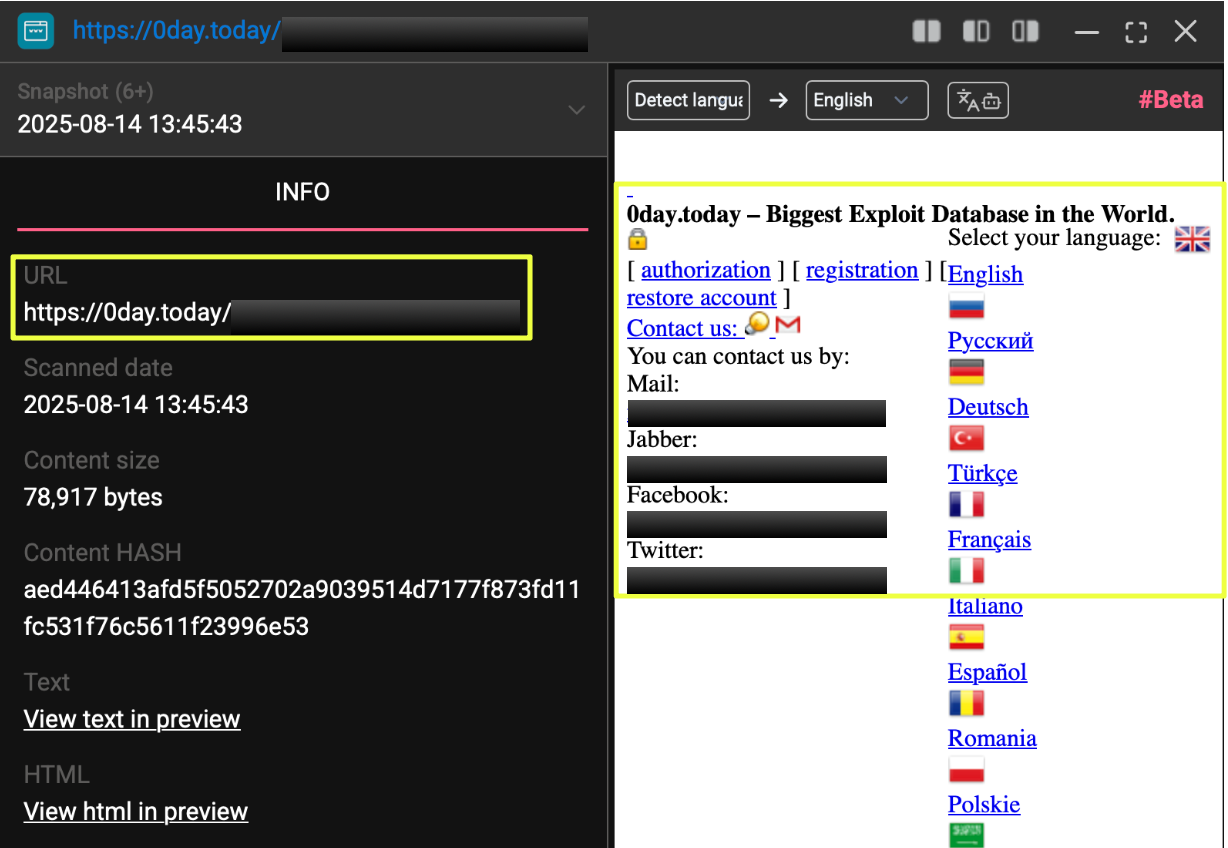
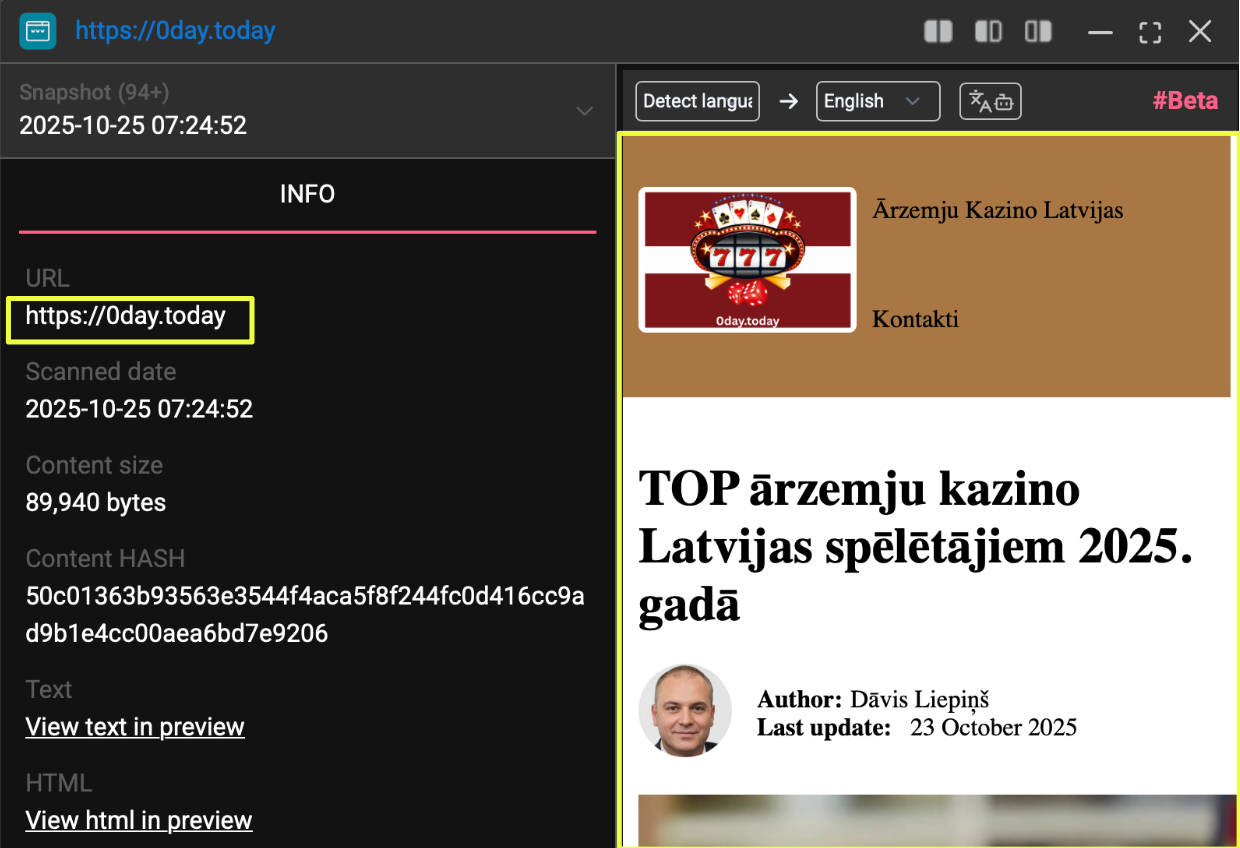
One of the clearest indicators of this fragmentation was the behaviour of the primary web domain. When accessed directly, https://0day.today resolved to a Latvian-language gambling website, an entirely unrelated commercial service that appeared to occupy the front-facing landing page. However, when navigating to internal historical paths such as https://0day.today/local#popup_welcome_div, the platform’s original interface reappeared: the signature green-themed Inj3ct0r layout, legacy exploit listings, references to “1337day Gold,” and familiar static elements that had been characteristic of the site for more than a decade. This coexistence of two unrelated web layers strongly suggests that while portions of the original backend remain online, the domain’s top-level index has been replaced, hijacked, or otherwise overwritten.

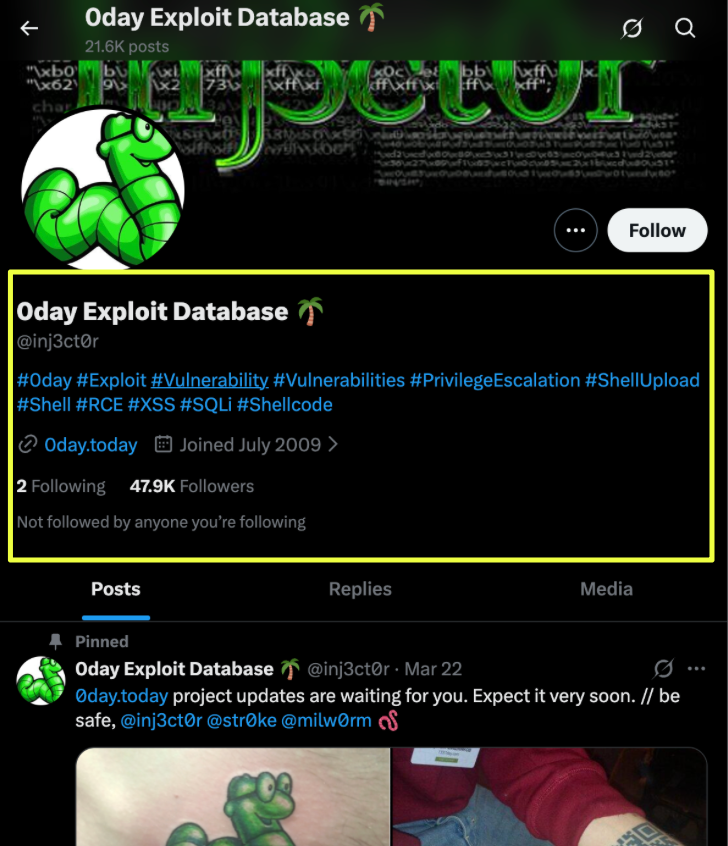
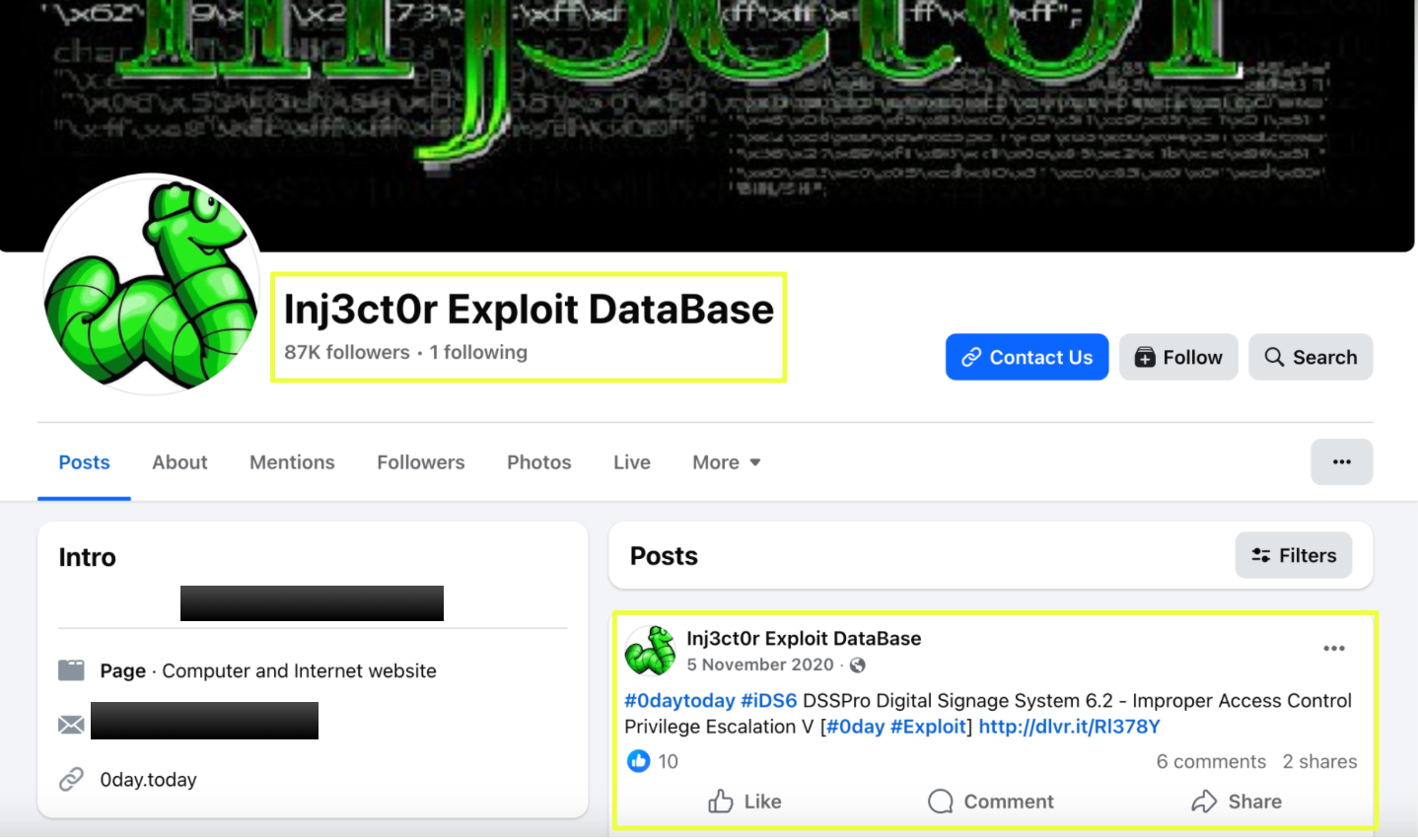
External accounts tied to 0day.today show a similar pattern of dormancy rather than deletion. Both the Twitter profile (@inj3ct0r) and the Facebook page (Inj3ct0r Exploit Database) remain publicly accessible, continue to list mr.inj*******r@gmail.com as a contact point, and retain branding consistent with the original platform. Yet activity on these channels effectively stopped years ago: the last Facebook post dates to 2020, and the Twitter account’s final message in March 2022 featured non-operational content rather than platform updates. User comments on Facebook further imply service disruption, with at least one complaint indicating payment was taken without deliverables. These signals align with the overall picture of an abandoned or minimally maintained service rather than an active exploit marketplace.

StealthMole’s exposure datasets reinforce this interpretation. Queries for 0day.today resulted in 544 records in the Compromised Data Set and 508 records in the ULP Binder, primarily reflecting leaked user credentials associated with registration or login endpoints such as https://0day.today/reg and /auth. Additionally, the email mr.inj3ct0r@gmail.com, repeatedly cited across legacy platform pages and operator profiles, appeared in thousands of leaked entries, 4,757 in Combo Binder and 2,567 in Credential Lookout. The scale of these exposures suggest that accounts linked to the historical platform’s operator have been widely compromised, further diminishing the likelihood of a functioning administrative presence.

0day.today continues to circulate in community spaces where exploit-related content is discussed. The platform’s TOR mirror mvfjfugdwgc5uwho.onion was referenced in dozens of Telegram messages, usually embedded in broad lists of dark web resources rather than in announcements of active services. Mirrors appear on indexing services like OnionTree, sometimes accompanied by cautionary notes flagging scam reports. These references reflect persistence through inertia, the platform survives in collective memory and archival lists, even if its operational status no longer matches its historical reputation.

  • curaj33verawgaddbsdsrzc5krmopfyqnei66io5ldhqwdiqukt4vcyd.onion

Taken together, the evidence points to a platform that is no longer operational in any consistent or reliable sense, yet remains partially online due to remnants of its original infrastructure and the enduring circulation of its identifiers. The hybrid state, abandoned accounts, leaked credentials, an overwritten homepage, and surviving internal pages, suggests that 0day.today’s legacy footprint is being passively preserved by various web layers rather than actively maintained by its former operators. Subsequent sections build on this assessment, mapping how these observed signals intersect and what they collectively imply about the platform’s current standing in the exploit ecosystem.

Conclusion

The fragmented state of 0day.today offered a reminder of how difficult it can be to interpret legacy infrastructure in the cybersecurity ecosystem. What appeared at first glance to be a single platform instead revealed multiple layers of historical residue: surviving mirrors, dormant branding, abandoned operator accounts, and a main domain that no longer reflects its original purpose. Rather than pointing to an active marketplace or coordinated threat operation, the investigation ultimately highlighted how long a service’s digital footprint can continue to surface even when its core function has deteriorated or disappeared entirely.

By tracing these remnants through StealthMole, the investigation demonstrated the value of evidence-driven mapping in situations where narratives, assumptions, and community memory can easily overshadow verifiable facts. Each dataset, Telegram references, onion mirrors, old submissions, leaked credentials, contributed a different angle, not to reconstruct a thriving ecosystem but to understand how the platform continues to echo across the surface, deep, and dark web long after its period of relevance.

In that sense, the significance of this case lies less in the operational status of 0day.today and more in the methodology used to untangle it. Platforms with long histories often leave behind sprawling, inconsistent trails, and distinguishing between what is active, what is abandoned, and what is simply repurposed requires a structured, cross-source approach.

Editorial Note

Investigations into legacy cyber platforms rarely yield clean narratives, and 0day.today was no exception. Instead of a definitive answer about what the platform “is,” the process revealed how complex and uneven the digital remains of long-running services can be. This report reflects an evidence-first approach, acknowledging that visibility across surface, deep, and dark web sources is always partial and inherently shaped by what still exists, what has decayed, and what communities continue to circulate. While the findings map the observable footprint of 0day.today as it stands today, they should be understood as a snapshot rather than a final judgment: an illustration of how open-source intelligence can clarify, but not always conclusively resolve, the shifting identities of platforms with long and tangled histories.

To access the unmasked report or full details, please reach out to us separately.

Contact us: support@stealthmole.com 

Labels:

Learn more about StealthMole

Talk to our team of experts today to learn how you can manage your dark web exposure.
Request demo More Reports

Share this report